Ready-made U10 sessions
Three one-hour sessions you can run as they are. Open one in TacticsBoard and tweak it for your team.
U10 session: passing and first touch
U10 session: 1v1 and finishing
U10 session: defending and transitions
Passing and first touch
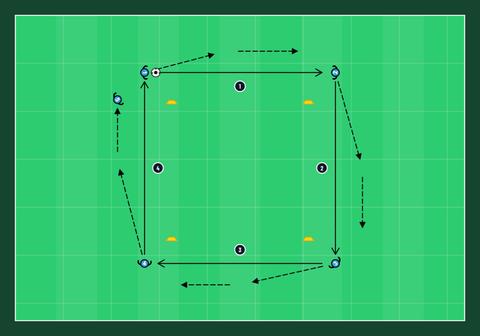
Square passing with directional control
Players are positioned at four cones in a square. The ball is moved clockwise: the player plays a pass to the next cone and sets off running after the pass. The receiver takes the ball with a directional first touch.
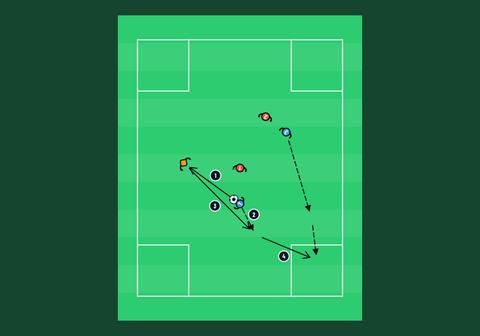
Corner square game: pass and move
Many players make a pass and then just stand and watch the ball. In this game, you do not score points by standing still. The passer must move into a new space, and you can only arrive in the square by timing the run. The animation first shows the typical mistake and then the correct way. Area 20 × 25 m, with a 5 × 5 m square in each corner. Two teams and a joker, who always plays with the team in possession. The diagram shows 2v2 and a joker, so the attackers have 3v2 numerical superiority. With a bigger group, for example 4v4 and a joker. The attacking team scores a point by passing to a player who has run into a square. The joker does not score points. You cannot wait in the square. You only move there when the pass is coming, and after a point the ball is brought straight back out. When the defenders win the ball, the roles switch and the joker changes sides.
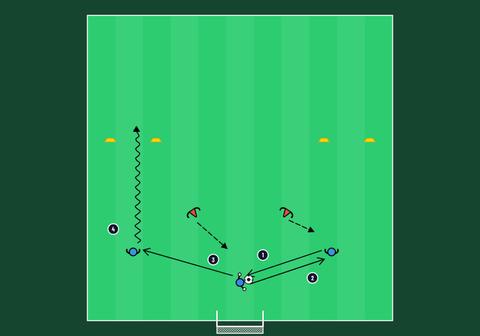
Playing out from a goal kick 3v2
Practise the goal kick in an 8v8 game, where play is started with short passes. The goalkeeper and two centre-backs play against two players pressing. The centre-backs spread out wide level with the corners of the penalty area, and the goalkeeper kicks the ball from the ground to the one who is free. The blue team scores a point when they pass or dribble the ball through the wide gate about 24 metres from the goal line. The reds try to win the ball and score a goal. When the player pressing closes down the centre-back, the centre-back passes the ball back to the goalkeeper, and the goalkeeper switches play to the other side. Start without players pressing, then add one and finally two. In 8v8 for 10-11-year-olds, a goal kick may be taken from the ground anywhere in the penalty area, and the opponent does not have to retreat: it is enough to be 5.5 metres from the ball. The players pressing may therefore stand just as close in the drill as in a match.
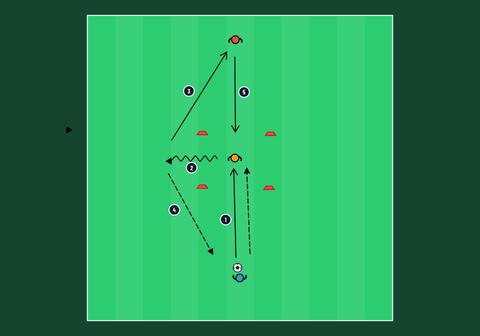
Passing and first touch with continuous movement
A three-player drill with one in the middle of a square marked by cones and two on either side at passing distance. The drill starts with a pass, which the player in the middle aims to guide with the first touch outside the square and immediately pass to the third player. After the pass, move into the centre and the middle player fills the empty space.
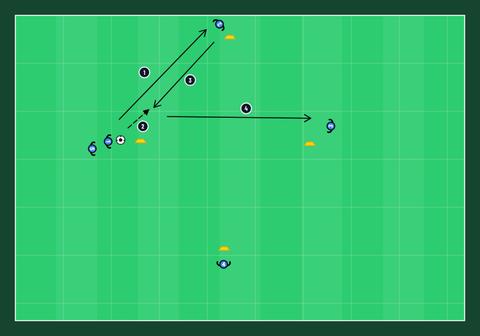
Passing diamond
A diamond is made with cones, with two players at the first cone and one player at each of the others. Player 1 plays the first pass to player 2, who then plays a one-two back. Player 1 aims to play a long pass to player 3 with the first touch. After the passes, always rotate in the direction of the pass.
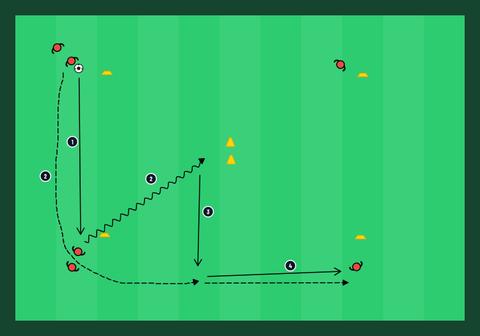
Passing for an overlap
Player passes the ball and makes an overlapping run behind the other player. The receiver dribbles the ball near the cones and passes to the overlapping player, who then passes on to the third queue. The drill progresses in four phases: 1) initial pass, 2) dribbling towards the cones, 3) pass into the overlap and 4) pass to the third queue.
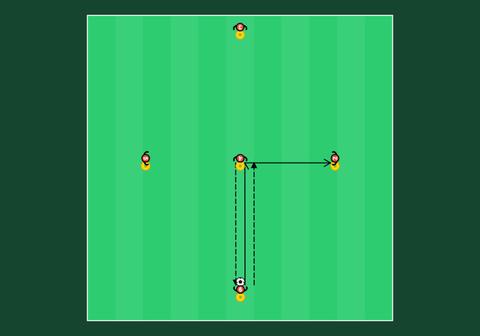
Cross passing with rotation
Five cones in a cross shape: one in the middle, four around it at a distance of 5–10 metres. One player at each cone. The ball starts from an outer cone and is played to the middle player. The middle player takes a directional first touch and with it plays a pass to a new outer cone, not back to where the ball came from. Then the passer and the middle player rotate positions: the passer runs into the middle, and the middle player takes the now free outer position. So there is a different player in the middle on each round. Adjust the distances according to the players’ age and skill level.
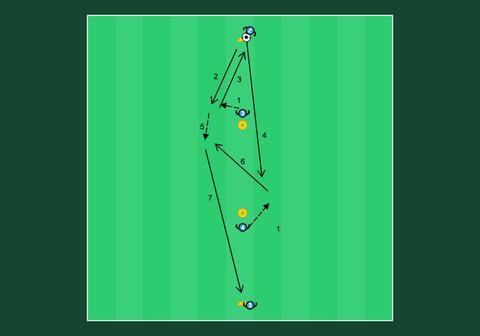
Line passing 3/3
Four players in a line 10–15 metres apart, with a marker at each position. Numbers from top to bottom: two, three, four, five. Two starts with the ball. Going down: two passes to three, who returns it straight back. Two plays a long pass beyond three to four, four directs the ball to three, and three plays a long pass beyond four to five. Going up, the same as a mirror image: five passes to four, gets the return pass and plays a long pass beyond four to three. Three directs it to four, four plays a long pass back to two, and the sequence starts again. Three and four move away from the line to opposite sides just before the pass is played. This allows the long pass to travel beyond the previous player. After their own pass, they return to the line. Short passes with two touches, long passes firmly along the ground. When the pattern is flowing, tighten the short passes to one-touch.
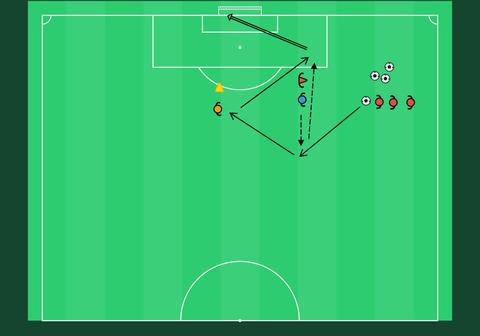
Finishing from a one-two
The blue player makes the initial movement away from the defender and the first player in the queue plays a pass into the movement. The blue player takes a control and immediately continues with a pass to the yellow player. The yellow player lays off the one-two behind the defender and the blue player aims to shoot the ball into the goal directly from the pass. The defender tracks the run but does not intercept the passes. Rotation: from attacker to laying off the one-two and defender to attacking. The player laying off the one-two goes to the back of the queue and the player making the first pass becomes the defender.
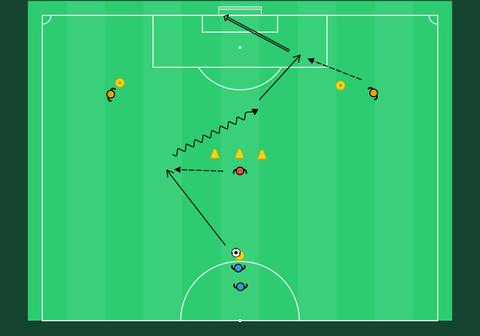
Passing, dribbling and shot from a through pass
The player in front of the cones makes a movement to either side of the line of cones and asks for the pass. The first player in the queue plays a pass and the receiver takes a short dribble towards the player positioned on the opposite diagonal and plays a through pass to them. The receiving player tries to "avoid offside" (the cones represent the deepest defenders) and finish first time from the pass.
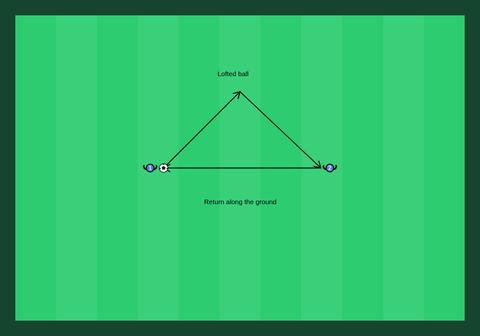
Control from the air
In pairs: the server throws a lofted ball to the receiver, who controls it with the thigh, chest or instep and plays the ball back along the ground in two touches. Three stations: thigh and down to the ground, chest and down to the ground, instep and down to the ground.
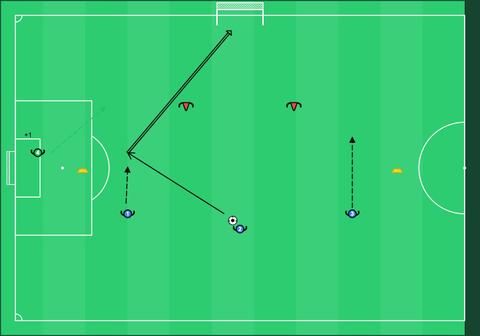
3v2+1 numerical superiority attack
Three attackers play against two defenders. One additional player waits on the flank and joins in when the ball crosses a certain line. The attackers aim for quick finishing before the defending can get organised. If the defenders win the ball, they play a counter-attack.
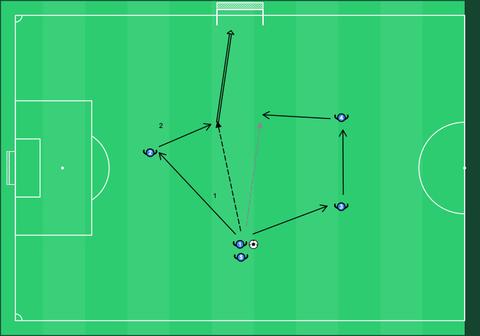
Combination play with one-twos
Players practise different one-two patterns on the move: a simple one-two or a triangle passing pattern. Each pattern ends with a shooting opportunity. First without defenders, then with passive defenders and finally with active defenders.
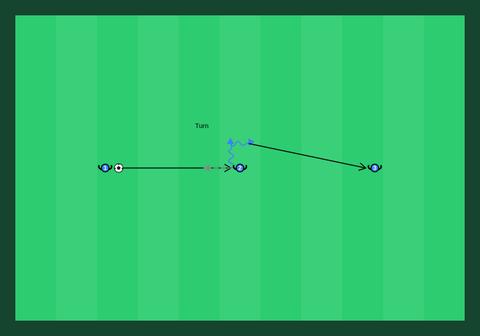
Control and turning
The central player moves towards the passer, takes the control with the first touch and turns 180 degrees. Passes with the second or third touch in the opposite direction to the target player.
Dribbling and 1v1
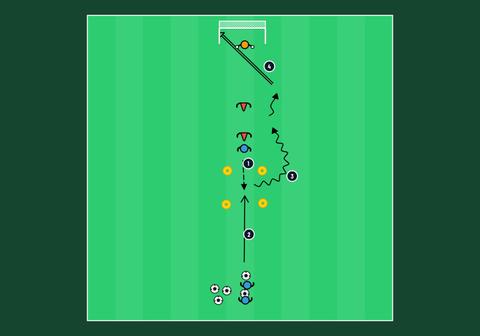
Two-phase 1v1 to goal
Two-phase 1v1. Starts with the attacker’s movement. The attacker asks for the pass into a square marked out with cones (the 1st defender follows), where they aim to move the ball with their first touch to either side. Once the ball is outside the square, it is the second defender’s turn to defend. Now a traditional 1v1, where the attacker aims for finishing. Rotation of roles: attacker goes to the back of the queue, 1st defender becomes the attacker and the second defender becomes the first defender. The passer becomes the second defender.
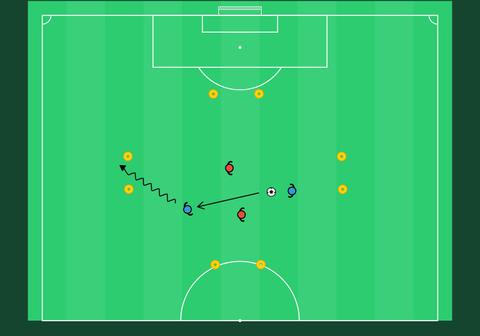
2v2 to four goals
2v2 in a small area, with four cone goals on the edges of the pitch. A goal is scored by dribbling the ball through any pair of cones. Because there are goals in every direction, the player on the ball must constantly turn and shield the ball to find an open goal.
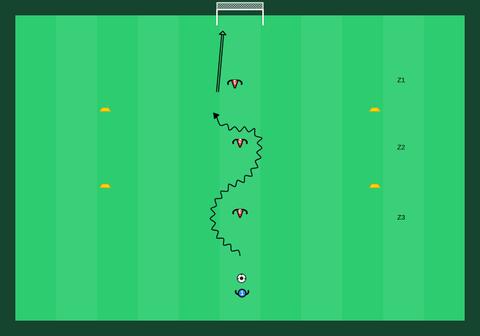
1v1 challenges — three-zone channel
The attacker starts with the ball from the edge of the first zone. In each zone, a different defender is waiting, who must be beaten to get through. After the final beat an opponent, a shot at goal.
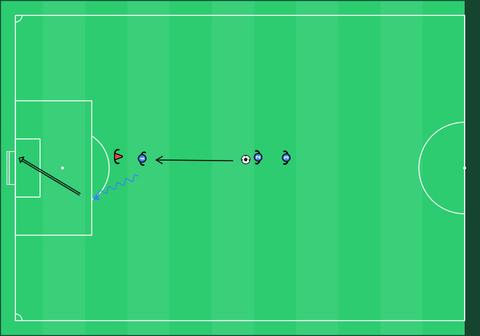
1v1 with back to goal — turn and shoot
The attacker stands with their back to goal in the middle of the area, with a defender behind them. The passer plays a pass to the attacker, who tries to turn and score. The defender aims to prevent the turn. The attacker's task can be made easier by requiring the defender to keep their hands behind their back.
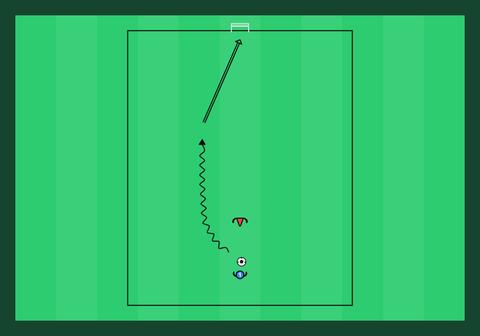
1v1 channel — beat an opponent situation
The attacker starts with the ball at one end of the channel, the defender stands in the middle of the channel facing the attacker. The aim is to beat the defender with a feint or a change of direction and score.
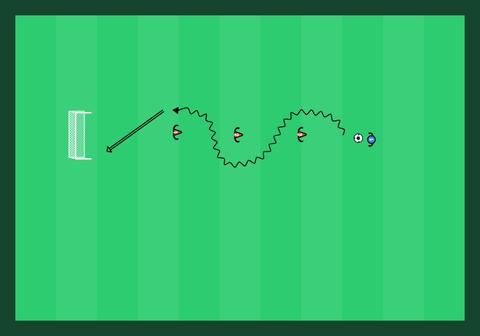
Dribbling-through course
The player starts to dribble the ball towards the first defender and tries to beat an opponent in a 1v1 situation. After beating the defender, the player continues to the next defender and finally finishes into the goal. The defenders are passive (U10–U11) or active (U12+).
Finishing
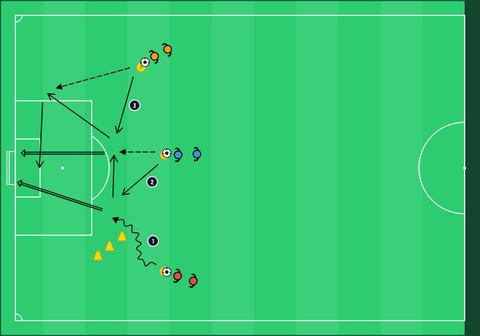
Finishing from three positions
The red player sets off, feints past the cone defender and shoots into the goal. The blue player immediately gives a pass to the red player, and the red player lays off a one-two for the blue player to shoot into the goal. After this, the yellow player gives a pass to the blue player, who plays a one-two towards the end line. The yellow player crosses from the end line, and both the blue and red players take part in the finishing.
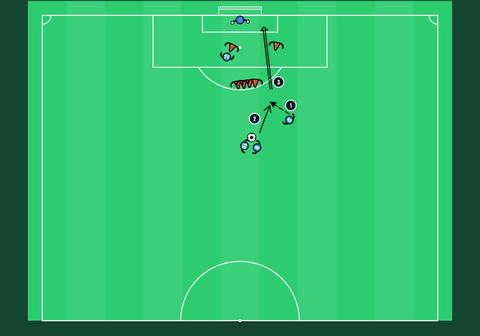
Free kick: argument and the walker
Two players stay over the ball and start acting out a disagreement about which one will take the shot. Meanwhile, a third walks calmly towards his own position out wide, without looking towards the ball even once. In the middle of the argument, the ball rolls into his path, and the shot is taken with the first touch from a new angle that the wall cannot turn to in time. The pattern lives or dies with the walker: as soon as he glances at the ball or changes into a run too early, the defending reads the pattern. The pass is played only when the walker is one step away from the shooting position.
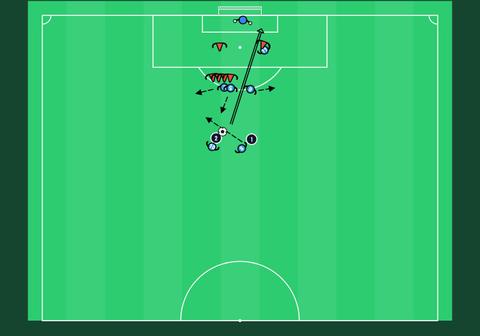
Free kick: splitting screen
Direct free kick from around 20 metres, where your own line of three players stands in the goalkeeper’s line of sight, at least one metre away from the wall, as the law requires. A decoy runner goes over the ball, and at the same moment the line splits to the sides. The shooter strikes low through the newly opened channel into the far corner, where the goalkeeper only has time to look once the ball is already moving. The role of the line is not to cover the whole goal but to take away the goalkeeper’s moment of release: a goalkeeper who reacts late will not reach the low corner. Practise the line splitting so that it happens exactly on the shooter’s final step — if the line splits too early, it reveals everything.
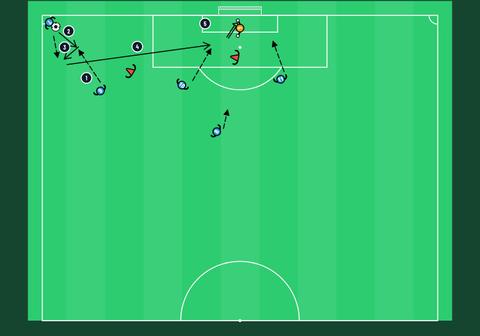
Short corner
The corner is played short. The supporting player comes towards the corner flag and receives a pass, which makes the nearest defender come out of the penalty area to apply pressure. The ball is then played back to the taker, who has meanwhile moved from the corner to around eight metres away. The angle for the cross is better from there, and the ball can be delivered low between the near post and the goalkeeper. The player running to the near post finishes one-touch, and the run to the far post starts at the same time. There are two defenders: one applies pressure to the short corner, the other defends the area. Without the defender coming out, the pattern does not show why the short corner works.
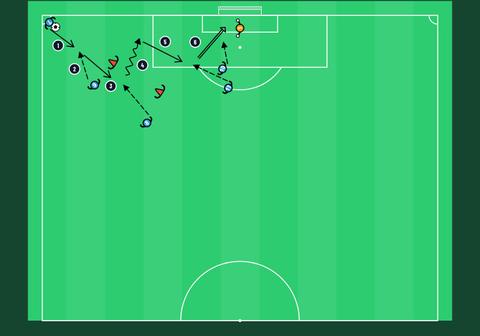
Short corner with three
The corner is played short between three players. The player closest to the flag comes short and receives the pass, which brings the first defender out. Instead of the ball being returned to the taker, it goes first touch to the third player, who has come from the edge of the penalty area into the same corner. Now the second defender also has to come out, and the third player dribbles between them to the end line. From the end line, the ball is played back low towards the penalty spot. The finisher times the run so that they move towards the ball rather than waiting for it standing still. The player occupying the near post takes the goalkeeper with them. Two defenders out means there is briefly a 2v1 in the penalty area. That is the whole idea of the move: the short corner is not looking for a cross but for numerical superiority.
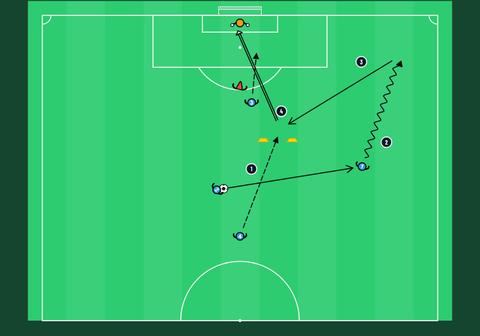
Lay-off for the second wave
A pass from the centre to the winger, who dribbles all the way to the byline. The attacker takes the defender with them to the near post. When the defending has dropped towards the goal, the midfield player arrives late at the edge of the penalty area into the gate. The winger lays the ball back and the arriving player shoots first time from the pass. A goalkeeper in goal. Start alternately from both flanks.
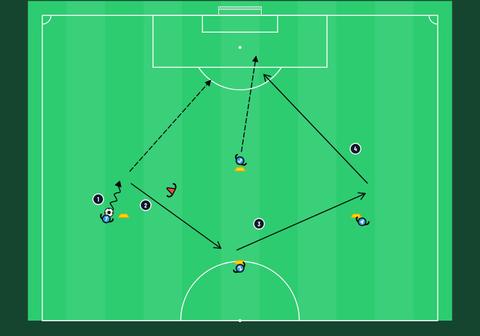
Switch of play and cross
Four players in a diamond: both flanks, one in the middle at the front and one in the middle at the back. The wide player starts dribbling towards goal. The deepest player calls, which stops the dribbling and the ball is played back. The deepest player switches play first time to the opposite flank, who advances and delivers a cross. The others arrive in front of goal in staggered runs to finish. Start alternately from each flank. Instead of a cross, a sharp low pass from the flank is also allowed.
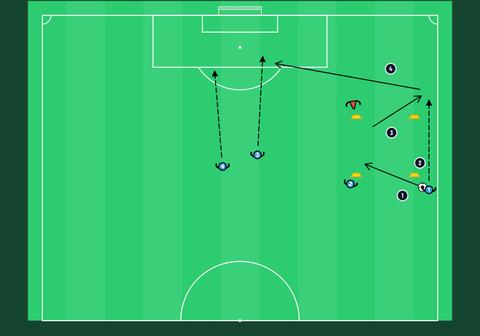
Wide 2v1 and cross
Two attackers break down one defender out wide and deliver a cross. The wide player passes to the inside player, who comes towards the ball and turns towards goal. At the same time, the defender sets off from the opposite corner to apply pressure. The passer immediately makes an overlapping run on the outside past their teammate, into the space between the penalty area and the touchline. From there, they receive the ball back and deliver a cross. The run into the penalty area is staggered: one to the near post, the other to the far post. The defender does not follow outside the square. Start alternately from both flanks. Alternatively, the wide player can solve the situation themselves in a 1v1, either by going inside or down the touchline.
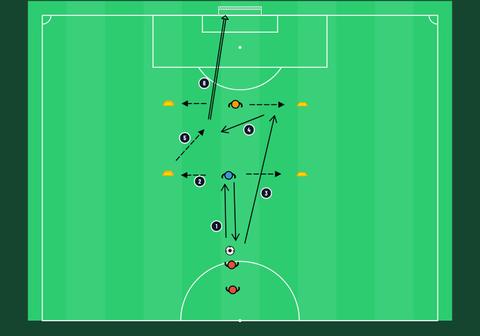
Barcelona shooting drill
A pass is played from the line to the blue player, who plays a one-two back to the first player in the line. He then chooses which cone to move to, and the yellow player moves to the opposite cone on his own line. The first player in the line passes to the yellow player, who lays off a one-two to the blue player, who aims to shoot first time from the pass into the goal.
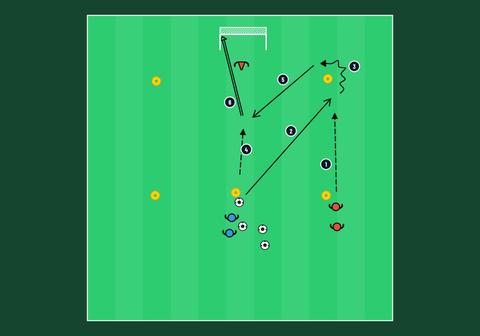
Finishing from a cut-back
The drill starts with the red player making a movement, which the player in the middle looks to find with a pass. The red player controls the ball, goes around the cone near the end line and plays a cut-back pass to the central player, who looks to shoot and score. The queues change after every repetition.
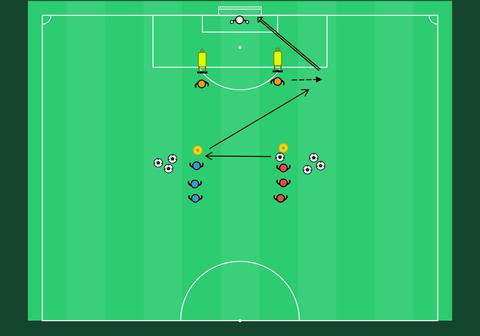
Finishing - defender behind the back
The situation starts with a sideways pass from one queue to the other. The diagonal attacker (orange) moves away to the side from the defender and looks to shoot immediately after the control. In the second variation, the attacker's movement is to the inside of the defender.
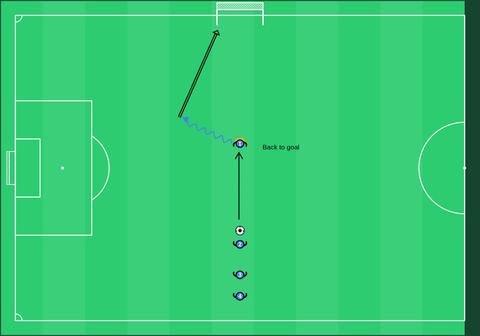
Turn and shoot
The player stands with their back to goal around 11–14 metres away, with the passer in front. The passer plays a low pass, the player controls the ball with the first touch to the side and shoots with the second touch.
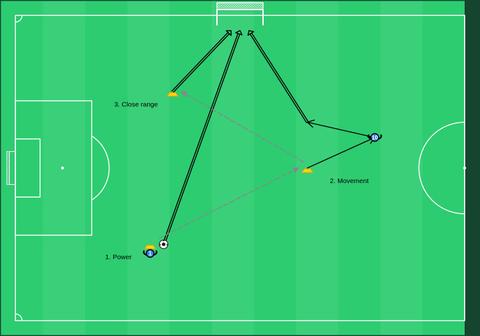
Shooting circuit
Three-point shooting circuit: (1) power shot from around 20 metres, (2) shot on the move from the passer’s lay-off from around 14 metres and (3) close-range shot or half-volley from short distance. After each shot, quickly move to the next station.
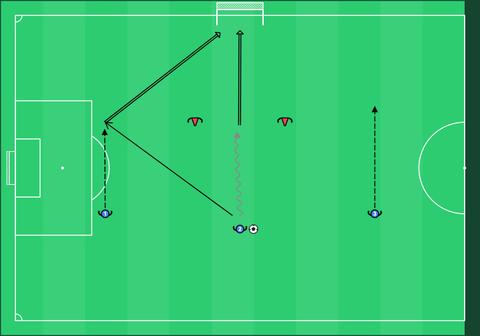
3v2 finishing
Three attackers start with the ball and move towards two defenders. The aim is to create numerical superiority and finish. After a goal, the attackers receive a new ball and attack the opposite goal.
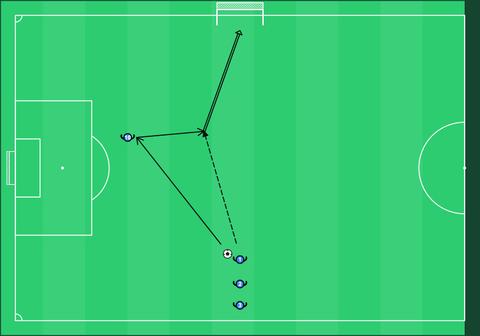
Passing and shooting
A line of players 18–20 metres from the goal, the passer at the edge of the penalty area. The shooter passes to the passer and continues the run, the passer returns the ball with one-touch into the shooter’s path. The shooter finishes directly or with one-touch.
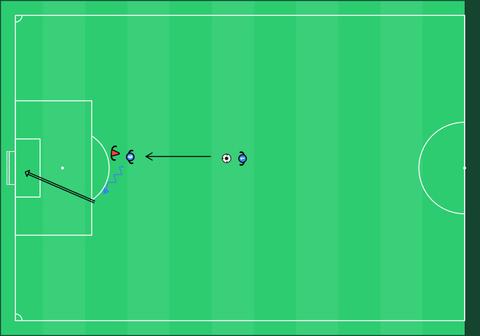
Back to goal — turn and finish
Attacker on the edge of the penalty area with back to goal, defender behind. The passer plays the ball to the attacker, who takes control, turns away from the defender and finishes. Check the defender’s position over the shoulder. Depending on the age group and skill level, you can make it easier at first by requiring the defender to keep their hands behind their back.
Defending
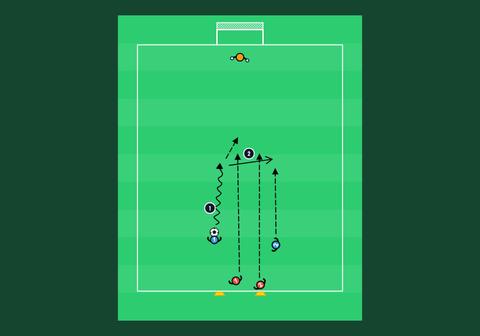
2v2 recovery defending
Two blue players attack the goal with a goalkeeper. Two red defenders start from the markers behind the attackers. The area is approximately 20 x 24 metres, with a cone gate at the opposite end. The blues start with the ball and drive towards the goal, and at the same moment the reds recover. The nearer defender runs along the inside line to get between the ball and the goal and delays the player on the ball. The second defender recovers to the inside, between the remaining attacker and the goal. Once it becomes 2v2, the defenders apply pressing and provide cover. In the example, red 1 gets across in front of blue 1 and delays. When blue passes out wide, red 2 moves to press during the pass and red 1 drops to cover. Red 2 wins the ball, and the reds immediately attack the gate. Now the blues recover. The blues score a point for a goal, the reds for dribbling the ball through the gate. The farther away the defenders start, the more difficult the recovery becomes, so adjust the distance of the starting markers according to the level. Change roles after a few repetitions.
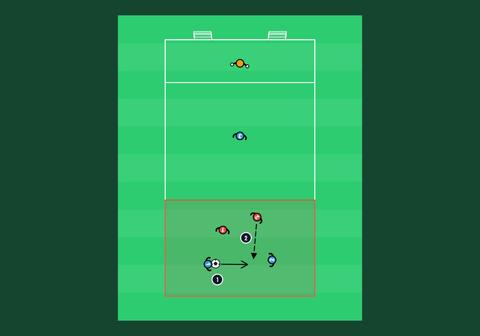
2v2 pressing and penetration
The area is approximately 14 × 24 metres and is divided into three sections. At the bottom is the 2v2 zone, in the middle the penetration zone and at the top the goalkeeper's area. On its end line there are two small goals. In the 2v2 zone, two blue players keep possession and two red players press as a pair. In the penetration zone, one blue defender waits. The reds' task is to win the ball. One presses the player on the ball, the other provides cover from the inside and reads the next pass. After winning the ball, the reds immediately break through: 2v1 against the blue defender and finishing into either small goal. Blue 1 and 2 are not allowed to follow from the 2v2 zone, blue 3 stays in the penetration zone and the goalkeeper stays in their own area. In the pattern, red 2 presses during the pass, and when the ball comes back, the roles change. When blue 1 tries to switch play again, red 2 intercepts the pass. Red 2 dribbles into the penetration zone, draws blue 3 towards them and passes to red 1, who shoots into the left small goal. Change roles every few repetitions so that everyone gets to press, defend the penetration and finish. The blues can be given a point, for example, for five consecutive passes in the 2v2 zone.
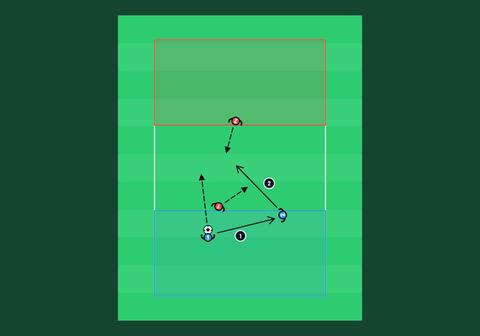
2v2 with a cover line
Two pairs play 2v2 in an area of approximately 16 × 24 metres. At each end there is an end line and a cover line eight metres in front of it. A pair scores a point when they dribble the ball over the opponent’s end line or pass to a teammate who controls it behind the line. The second player in the defending pair must be on or behind their own cover line. One presses the player on the ball, the other provides cover. They must not both go to the ball. The covering player may step off the line when they intercept a pass or win the ball from an attacker who has beaten the presser. In that case, the other defender immediately runs back behind the line. In the diagram, Red 1 presses the player on the ball from the inside and shows them wide. Red 2 is on the line diagonally behind on the inside. When Blue passes across to the other side, Red 1 shifts to press the new player on the ball while the ball is travelling, and Red 2 slides along the line to stay behind them. The pair move together. Blue 1 makes a run in behind the presser, but Red 2 reads the pass and intercepts it. After winning the ball, the Reds attack the Blues’ end line immediately. The nearest Blue presses, and the other runs behind their own cover line. Now the Blues defend in the same way. When Blue 1 wins the ball wide, only Red 2 gets back to the line in time. The Blues play a 2v1. Blue 1 draws Red 2 in and passes into the run of Blue 2, who dribbles the ball over the end line. Play 1–2 minute blocks. If there are more than four players, set up several pitches side by side or rotate pairs between blocks.
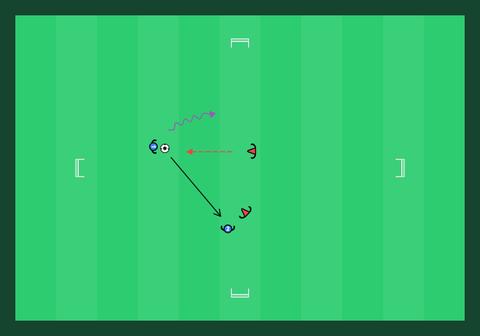
2v2/3v3 with small goals
2v2 or 3v3 small-sided game with small goals and no goalkeeper. When the team loses possession, transition immediately into defending: the first defender presses the player on the ball, the second covers and the third provides balance.
Small-sided games
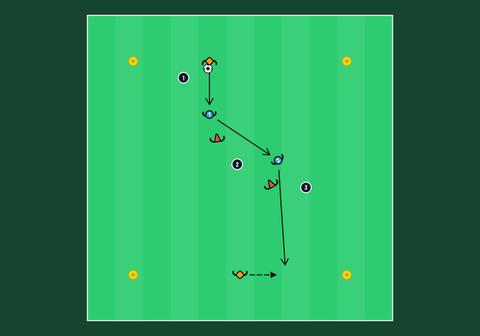
End zone game, target players in the end zones
Six players in three pairs in an empty area. No goals. One pair are the target players, one in each end zone, and they move only along their own end line. The other two pairs play 2v2 in the middle. A point is scored when the ball is dribbled from one end to the other, meaning from one target player to the other. After a successful pass, the same team continues with the ball in the opposite direction. The defending pair try to close the passing lane to the target player and win the ball. After winning the ball, the pair who won it can attack either end zone, but a point always requires the full distance: the ball must go from one target player to the other. In practice, the pair who won it start from the nearest end zone. Three minutes at a time, then the pairs rotate positions.
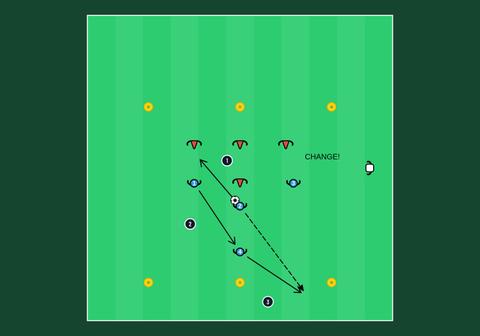
End zone game with changing direction
4v4 with an empty area, with end zones marked by cones at both ends. No goals. A point is scored when a player from your team receives a pass in the end zone. The coach calls for a change of direction during play, and the attacking direction switches from that moment. The defending team have just compacted towards the wrong end, so the space is behind them; this must be seen and used before they have time to turn. Playing time 3-4 minutes at a time, with several calls in each block.
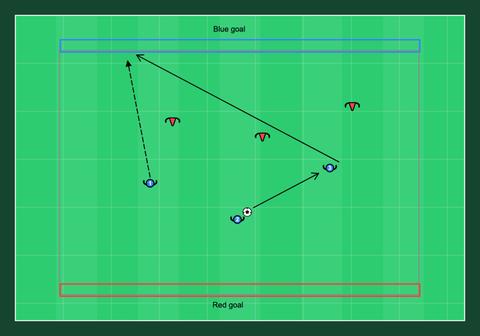
3v3 line game
3v3 game without goals. A goal is scored when a team manages to stop the ball behind the opponent’s end line. The receiver must get the ball under control behind the line; simply kicking it over the line is not enough. Teaches attacking and defending in depth.
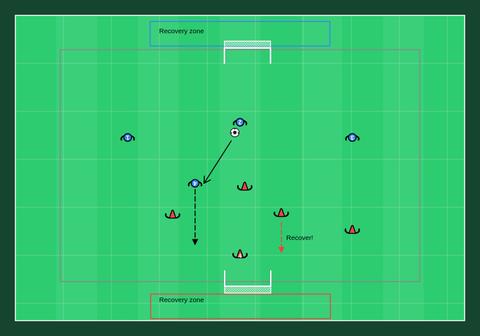
4v4 recovery zone game
4v4 game with two goals. Each team has its own "recovery zone" behind the goal. When a team loses possession, one player must go into the recovery zone before they can take part in defending. This creates temporary numerical superiority for the attacking team and forces a quick transition.
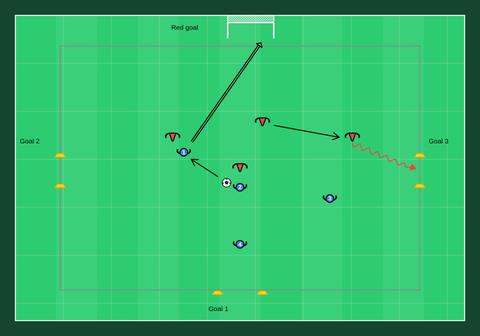
4v4 three goals
4v4 game in which one team has one standard goal and the other has three small cone goals in different parts of the pitch. The one-goal team attacks directly, while the three-goal team looks for the open goal. Roles change regularly.
Possession and transitions
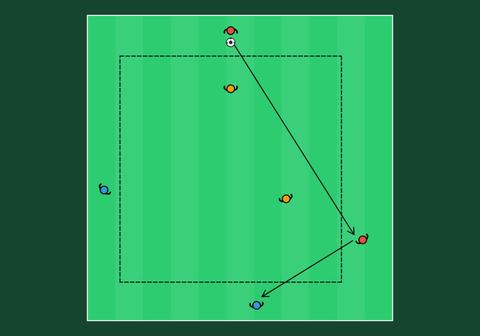
4v2 possession drill
Mark out a square area and make three pairs of two players. Two pairs are on the outside on the edges, so there are four passers, one on each side. One pair is inside the area winning the ball. The outside players keep possession from side to side. The players winning the ball share the job: one presses the player on the ball, the other blocks the next passing lane. When they win the ball, the pairs swap places and play continues immediately without a restart. Adjust the size of the square to the level. A smaller square shortens the passes and forces quicker first touch.
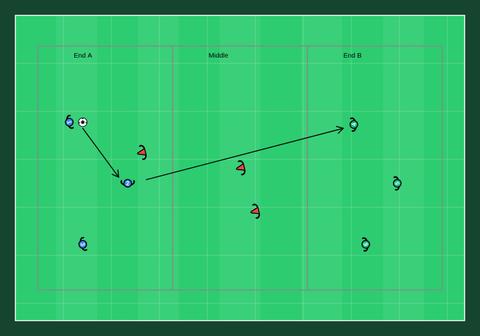
Three-zone possession drill (basic)
Three teams, one per zone (30×15 m divided into three 10×15 m areas). The teams in the end zones keep possession and try to pass to the other end zone. The middle team sends 2 players to win the ball in an end zone and 1 stays in the middle to cut out passes between the zones. When the ball is won or goes out, the team that lost possession moves into the middle. A point is scored when the ball is played successfully from end to end.
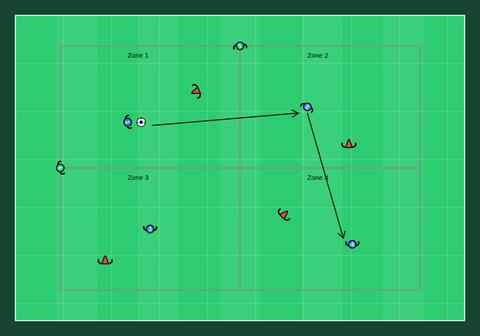
Possession square
Square-shaped area divided into four zones. Two teams (e.g. 4v4+2 jokers). The team in possession keeps the ball and tries to play into as many zones as possible. A point for each new zone the ball is played into in succession. The jokers always play with the team in possession.
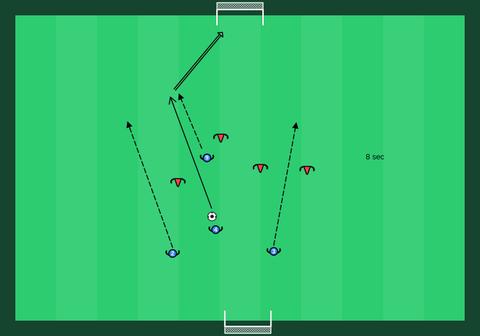
Counter-attack game
The defending team defends their own goal. When they win the ball, they have 8 seconds to attack the opposite goal. If a goal is scored within the time limit, the point counts double. The attacking team continues normal play. A quick transition from defending to attacking is decisive.
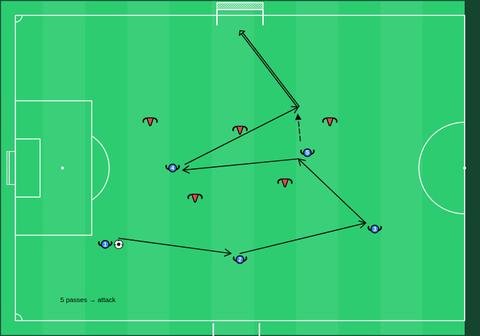
Possession to goal
Team game (e.g. 5v5+GK) on a half pitch. The team in possession keeps the ball and tries to attack the goal. Before attacking the goal, at least 5 consecutive passes are required. The defending team tries to win the ball and play a counter-attack to the other end.
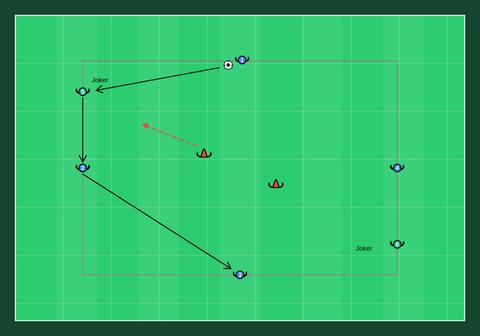
Numerical superiority possession drill with jokers
Possession drill (e.g. 4v2) with two jokers, who always play on the side of the player on the ball. The jokers move along the edges of the area and offer extra passing options. 1–2 touch limit for the outside players, jokers on unlimited touches. The defenders try to win the ball — the player who made the last pass goes into the middle.
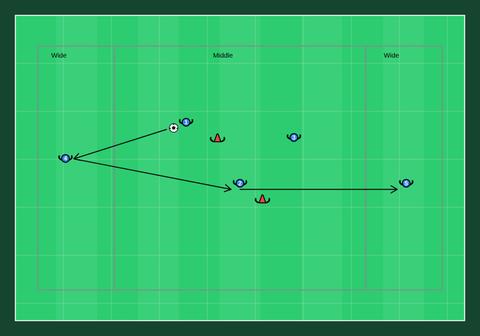
Zonal rondo
Three zones side by side (narrow-wide-narrow). The team in possession starts in the middle zone and tries to play the ball into the wide zone. The defenders try to prevent play to the side. After a successful pass to the side, the ball is played back into the middle and switched to the other side.
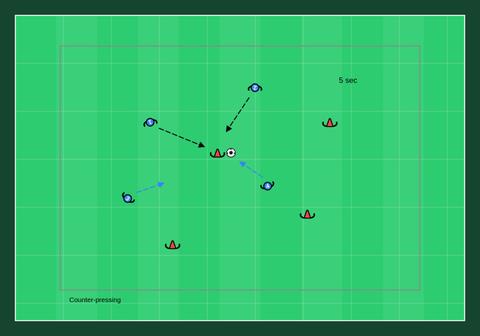
Counter-pressing game
Two teams play a possession game in a confined area. When a team loses possession, it has 5 seconds to win the ball back with counter-pressing. If the ball is won back, play continues. If not, the team that lost possession does a penalty task. Objective: immediate reaction to loss of possession.
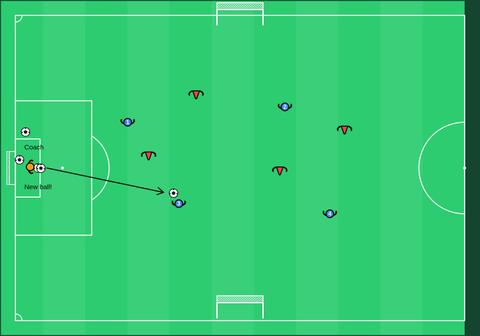
4v4 transition game
4v4 game with two goals (+GK). When the ball goes out of bounds or a goal is scored, the coach passes a new ball onto the pitch to a random team. Continuous transition situation: the teams never know who will get the next ball. Forces constant readiness in both attacking and defending.