1v1 soccer drills for attackers and defenders
In a 1v1 drill the attacker learns to take on a defender and the defender learns to stop them, so two players train at once. Give the duel a clear target, such as a goal, a pair of gates or an end line. The smaller the area, the faster the attacker has to decide. Each duel begins with a pass, so the defender arrives as in a game. Swap roles after every duel. The rounds stay short because 1v1s are tiring. The two articles below cover each side of the duel.
Two-phase 1v1 to goal
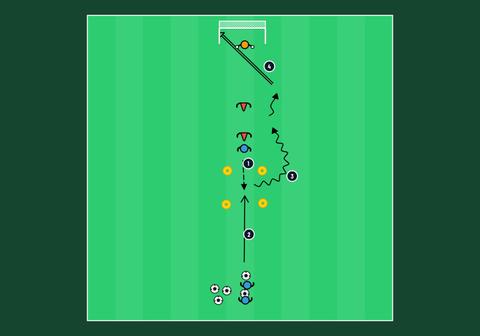
Two-phase 1v1. Starts with the attacker’s movement. The attacker asks for the pass into a square marked out with cones (the 1st defender follows), where they aim to move the ball with their first touch to either side. Once the ball is outside the square, it is the second defender’s turn to defend. Now a traditional 1v1, where the attacker aims for finishing. Rotation of roles: attacker goes to the back of the queue, 1st defender becomes the attacker and the second defender becomes the first defender. The passer becomes the second defender.
Dribbling and 1v1
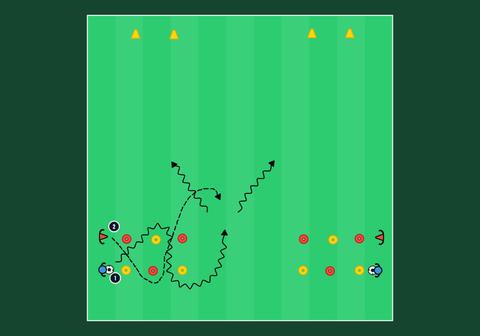
A 1v1 drill in which players first weave through cones and then go into a traditional duel towards two small goals. The defender can start moving when the attacker has reached the first turn. After winning the ball, the defender can score by dribbling over the end line between the cones. Change ends and roles after every repetition.
Running duel and winning the ball
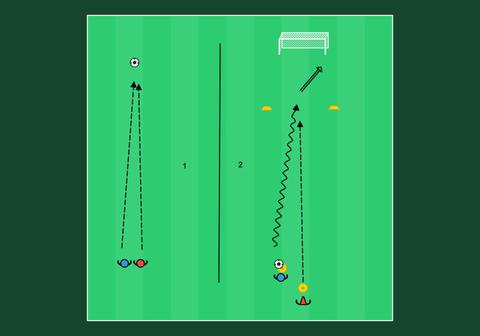
Train progressively how to initiate contact and win the ball with recovery pressing. In phase 1, the players set off on the coach’s signal and try to reach the ball first. Contact already from the start; use of the arms and taking control of the running line are important. In phase 2, practise winning the ball from a slightly similar situation where one player has the ball. The attacking player may try for goal if they are able to advance close enough.
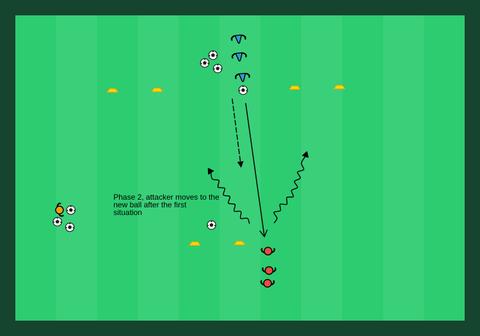
1v1 to gate goals
The drill starts with a defender’s pass and, after the control, the attacker tries to dribble into either gate goal. The defender tries to win the ball and dribble into the opposite gate goal. A second phase can be added to the drill, where after the first situation has ended, the coach adds a new ball and the attacker has to move with their back to the goals.
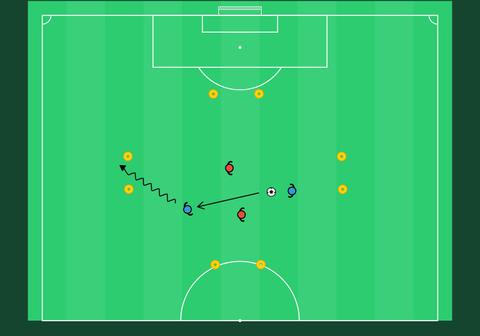
2v2 to four goals
2v2 in a small area, with four cone goals on the edges of the pitch. A goal is scored by dribbling the ball through any pair of cones. Because there are goals in every direction, the player on the ball must constantly turn and shield the ball to find an open goal.
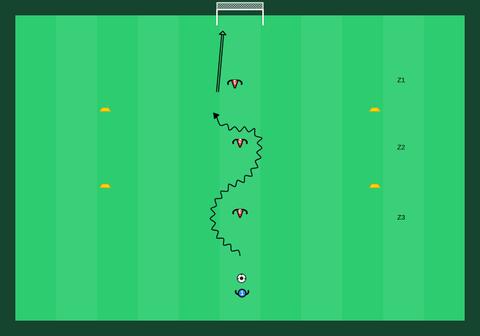
1v1 challenges — three-zone channel
The attacker starts with the ball from the edge of the first zone. In each zone, a different defender is waiting, who must be beaten to get through. After the final beat an opponent, a shot at goal.
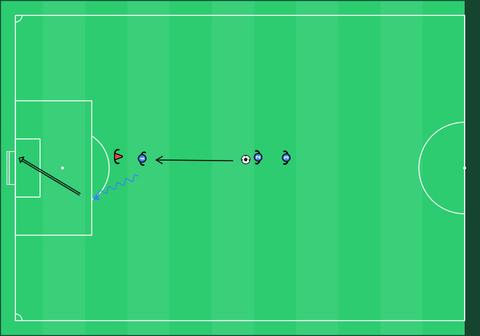
1v1 with back to goal — turn and shoot
The attacker stands with their back to goal in the middle of the area, with a defender behind them. The passer plays a pass to the attacker, who tries to turn and score. The defender aims to prevent the turn. The attacker's task can be made easier by requiring the defender to keep their hands behind their back.
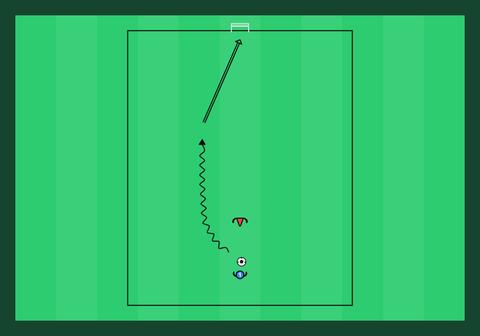
1v1 channel — beat an opponent situation
The attacker starts with the ball at one end of the channel, the defender stands in the middle of the channel facing the attacker. The aim is to beat the defender with a feint or a change of direction and score.
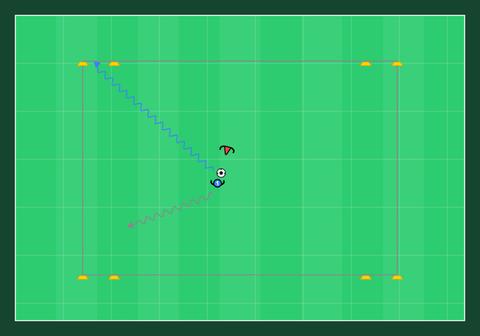
1v1 to four corner goals
Two players play against each other in a square-shaped area, with a cone goal in each corner. The player on the ball can attack any of the four goals and tries to dribble the ball through the goal.
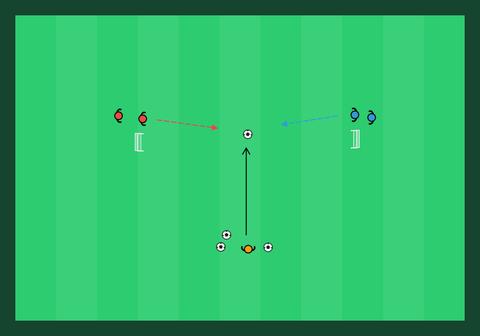
1v1 to goal — classic duel
The attacker and defender start from opposite ends of the area. The coach plays a pass into the middle of the area, and both set off to compete for the ball. The player who wins the ball attacks the opponent's goal.
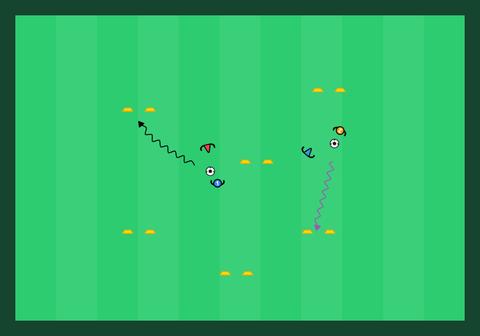
1v1 gate game
Players are split into pairs. There are several small gates on the pitch. The attacker on the ball tries to dribble the ball through a gate, the defender tries to stop them and win the ball. After a successful dribble through a gate, the attacker immediately continues to the next gate of their choice. The same gate cannot be used twice in a row.
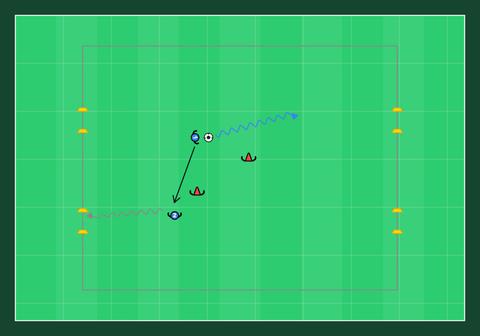
2v2 gate game
2v2 game in a small area, where both teams have 2 cone gates to defend on opposite sides. A goal is scored by dribbling the ball through a gate. A fast and intense small-sided game where every duel matters. Short games (90 seconds), pairs rotate.
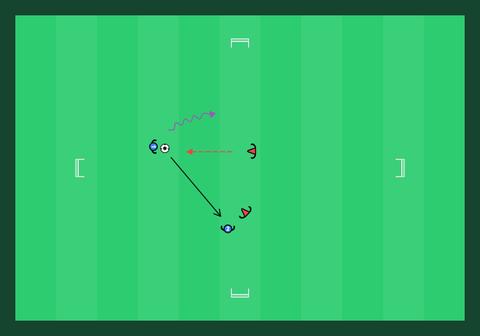
2v2/3v3 with small goals
2v2 or 3v3 small-sided game with small goals and no goalkeeper. When the team loses possession, transition immediately into defending: the first defender presses the player on the ball, the second covers and the third provides balance.
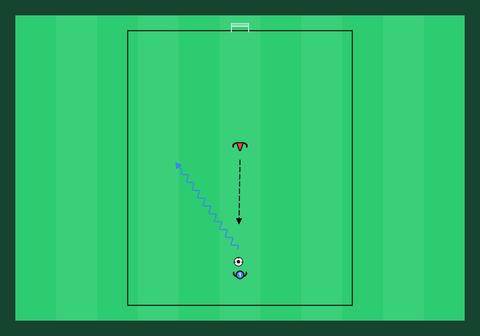
1v1 Defending Channel
The defender passes the ball to the attacker from the end of the channel and immediately sets off to close down the space. The attacker’s objective is to dribble the ball to the other end of the channel. The defender delays, shows the attacker to the side and tries to win the ball.
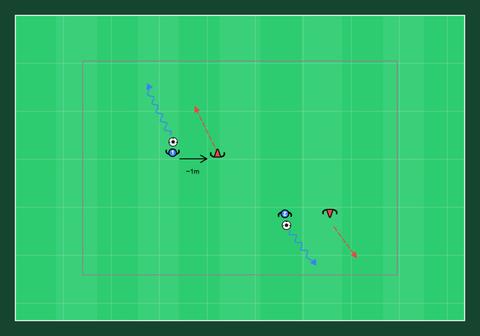
Shadow defending
In pairs: the attacker dribbles the ball freely inside the grid, changing direction and speed. The defender follows the attacker’s movements like a mirror, keeping about an arm’s length distance, and does not try to win the ball.
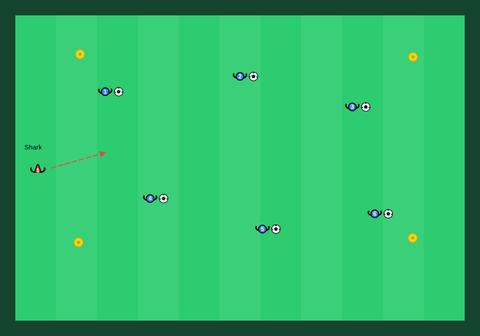
Shark Attack
All players have a ball inside the grid except for one "shark", who starts outside the area. On the coach's signal, the shark comes into the area and tries to kick the players' balls out. A player whose ball is kicked out also becomes a shark. The last player on the ball wins the round.
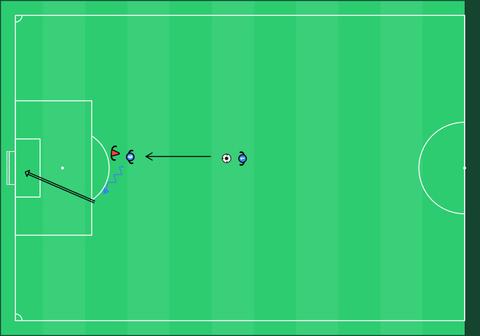
Back to goal — turn and finish
Attacker on the edge of the penalty area with back to goal, defender behind. The passer plays the ball to the attacker, who takes control, turns away from the defender and finishes. Check the defender’s position over the shoulder. Depending on the age group and skill level, you can make it easier at first by requiring the defender to keep their hands behind their back.
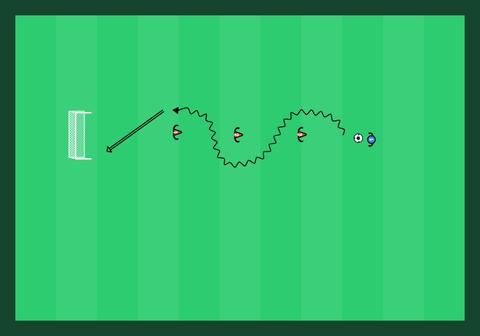
Dribbling-through course
The player starts to dribble the ball towards the first defender and tries to beat an opponent in a 1v1 situation. After beating the defender, the player continues to the next defender and finally finishes into the goal. The defenders are passive (U10–U11) or active (U12+).