Coaching 1v1 and team defending
Every defending drill comes back to the duel. The defender closes down quickly, slows down in time, stands side-on and stays on their feet. When one defender can do that, a second one joins to cover, and later a unit learns to shift with the ball and protect the space behind it. The attacker needs a real target to reach. Then the defender learns what to protect instead of just chasing the ball. The soccer defending drills here go from 1v1 duels to small-group defending. End each round before the defender's legs go.
2v2 recovery defending
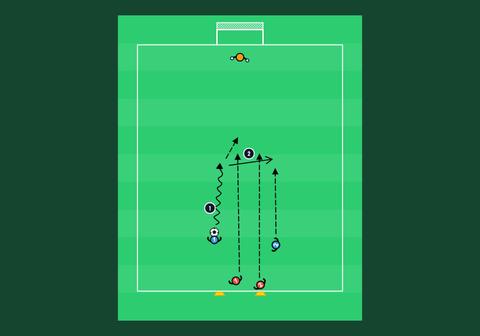
Two blue players attack the goal with a goalkeeper. Two red defenders start from the markers behind the attackers. The area is approximately 20 x 24 metres, with a cone gate at the opposite end. The blues start with the ball and drive towards the goal, and at the same moment the reds recover. The nearer defender runs along the inside line to get between the ball and the goal and delays the player on the ball. The second defender recovers to the inside, between the remaining attacker and the goal. Once it becomes 2v2, the defenders apply pressing and provide cover. In the example, red 1 gets across in front of blue 1 and delays. When blue passes out wide, red 2 moves to press during the pass and red 1 drops to cover. Red 2 wins the ball, and the reds immediately attack the gate. Now the blues recover. The blues score a point for a goal, the reds for dribbling the ball through the gate. The farther away the defenders start, the more difficult the recovery becomes, so adjust the distance of the starting markers according to the level. Change roles after a few repetitions.
2v2 pressing and penetration
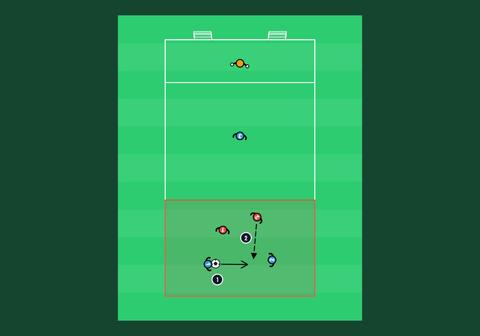
The area is approximately 14 × 24 metres and is divided into three sections. At the bottom is the 2v2 zone, in the middle the penetration zone and at the top the goalkeeper's area. On its end line there are two small goals. In the 2v2 zone, two blue players keep possession and two red players press as a pair. In the penetration zone, one blue defender waits. The reds' task is to win the ball. One presses the player on the ball, the other provides cover from the inside and reads the next pass. After winning the ball, the reds immediately break through: 2v1 against the blue defender and finishing into either small goal. Blue 1 and 2 are not allowed to follow from the 2v2 zone, blue 3 stays in the penetration zone and the goalkeeper stays in their own area. In the pattern, red 2 presses during the pass, and when the ball comes back, the roles change. When blue 1 tries to switch play again, red 2 intercepts the pass. Red 2 dribbles into the penetration zone, draws blue 3 towards them and passes to red 1, who shoots into the left small goal. Change roles every few repetitions so that everyone gets to press, defend the penetration and finish. The blues can be given a point, for example, for five consecutive passes in the 2v2 zone.
2v2 with a cover line
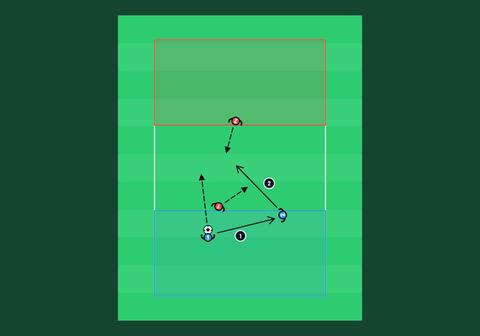
Two pairs play 2v2 in an area of approximately 16 × 24 metres. At each end there is an end line and a cover line eight metres in front of it. A pair scores a point when they dribble the ball over the opponent’s end line or pass to a teammate who controls it behind the line. The second player in the defending pair must be on or behind their own cover line. One presses the player on the ball, the other provides cover. They must not both go to the ball. The covering player may step off the line when they intercept a pass or win the ball from an attacker who has beaten the presser. In that case, the other defender immediately runs back behind the line. In the diagram, Red 1 presses the player on the ball from the inside and shows them wide. Red 2 is on the line diagonally behind on the inside. When Blue passes across to the other side, Red 1 shifts to press the new player on the ball while the ball is travelling, and Red 2 slides along the line to stay behind them. The pair move together. Blue 1 makes a run in behind the presser, but Red 2 reads the pass and intercepts it. After winning the ball, the Reds attack the Blues’ end line immediately. The nearest Blue presses, and the other runs behind their own cover line. Now the Blues defend in the same way. When Blue 1 wins the ball wide, only Red 2 gets back to the line in time. The Blues play a 2v1. Blue 1 draws Red 2 in and passes into the run of Blue 2, who dribbles the ball over the end line. Play 1–2 minute blocks. If there are more than four players, set up several pitches side by side or rotate pairs between blocks.
Pressing line and transitions
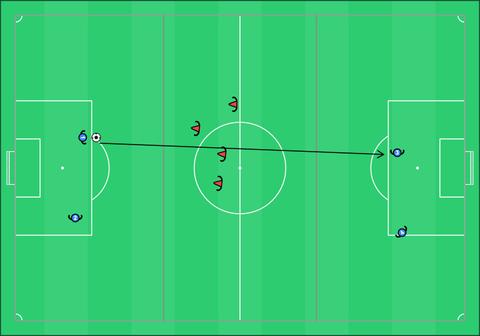
The pitch is divided into three vertical zones. The defending team sets up in the middle zone as a compact block. The attacking team plays the ball in the wide zones and tries to switch play. When the ball is moved, the defending block shifts together towards the ball.
2v2/3v3 with small goals
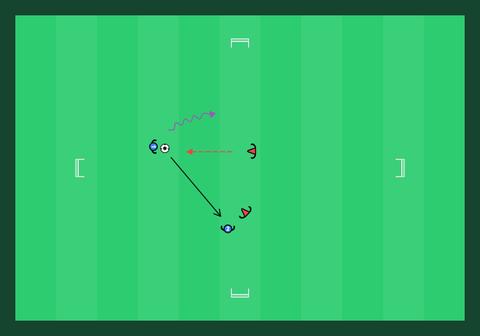
2v2 or 3v3 small-sided game with small goals and no goalkeeper. When the team loses possession, transition immediately into defending: the first defender presses the player on the ball, the second covers and the third provides balance.
Pressing drill (4v2)
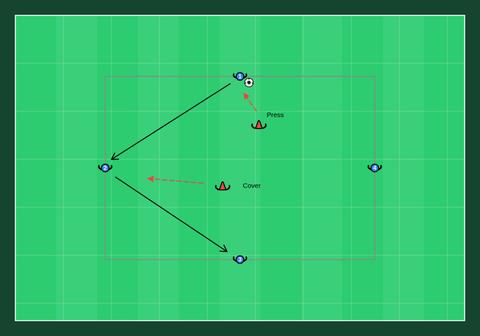
The outside players keep possession with one-touch or two touches, 2 defenders in the middle try to win the ball or intercept the pass. When a defender gets the ball or forces it outside the area, the player who made the last pass goes into the middle.
1v1 Defending Channel
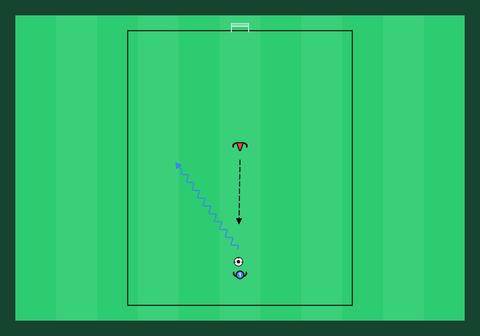
The defender passes the ball to the attacker from the end of the channel and immediately sets off to close down the space. The attacker’s objective is to dribble the ball to the other end of the channel. The defender delays, shows the attacker to the side and tries to win the ball.
Shadow defending
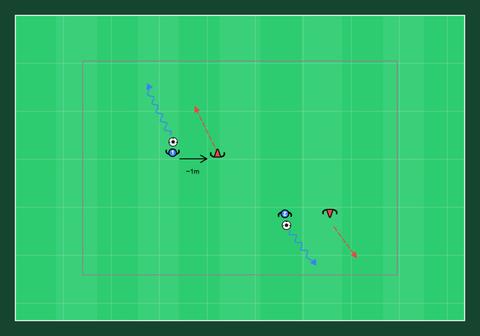
In pairs: the attacker dribbles the ball freely inside the grid, changing direction and speed. The defender follows the attacker’s movements like a mirror, keeping about an arm’s length distance, and does not try to win the ball.
Two-phase 1v1 to goal
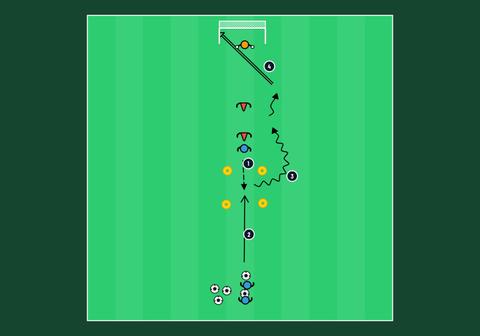
Two-phase 1v1. Starts with the attacker’s movement. The attacker asks for the pass into a square marked out with cones (the 1st defender follows), where they aim to move the ball with their first touch to either side. Once the ball is outside the square, it is the second defender’s turn to defend. Now a traditional 1v1, where the attacker aims for finishing. Rotation of roles: attacker goes to the back of the queue, 1st defender becomes the attacker and the second defender becomes the first defender. The passer becomes the second defender.
Dribbling and 1v1
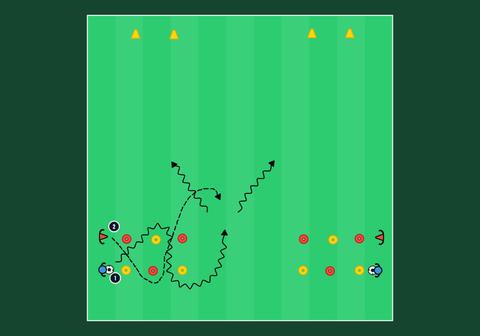
A 1v1 drill in which players first weave through cones and then go into a traditional duel towards two small goals. The defender can start moving when the attacker has reached the first turn. After winning the ball, the defender can score by dribbling over the end line between the cones. Change ends and roles after every repetition.
3v3 line game
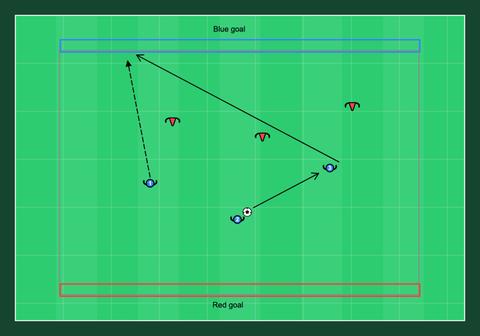
3v3 game without goals. A goal is scored when a team manages to stop the ball behind the opponent’s end line. The receiver must get the ball under control behind the line; simply kicking it over the line is not enough. Teaches attacking and defending in depth.
Running duel and winning the ball
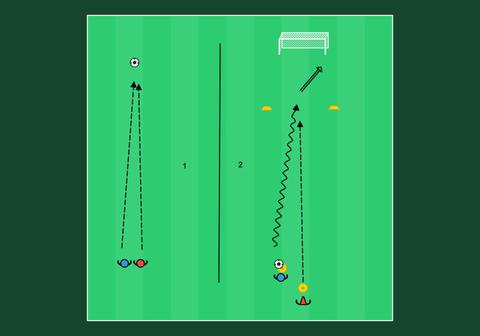
Train progressively how to initiate contact and win the ball with recovery pressing. In phase 1, the players set off on the coach’s signal and try to reach the ball first. Contact already from the start; use of the arms and taking control of the running line are important. In phase 2, practise winning the ball from a slightly similar situation where one player has the ball. The attacking player may try for goal if they are able to advance close enough.
1v1 to gate goals
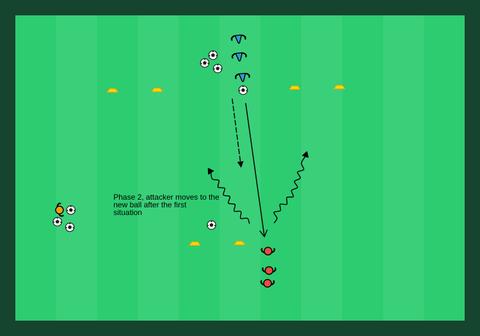
The drill starts with a defender’s pass and, after the control, the attacker tries to dribble into either gate goal. The defender tries to win the ball and dribble into the opposite gate goal. A second phase can be added to the drill, where after the first situation has ended, the coach adds a new ball and the attacker has to move with their back to the goals.
1v1 gate game
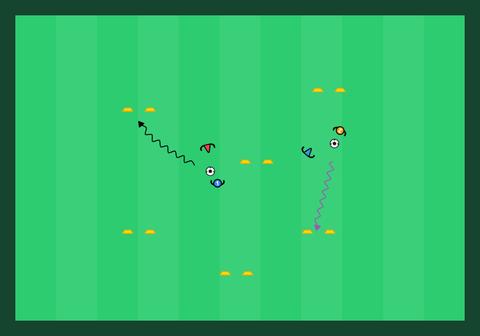
Players are split into pairs. There are several small gates on the pitch. The attacker on the ball tries to dribble the ball through a gate, the defender tries to stop them and win the ball. After a successful dribble through a gate, the attacker immediately continues to the next gate of their choice. The same gate cannot be used twice in a row.
Three-zone build-up game
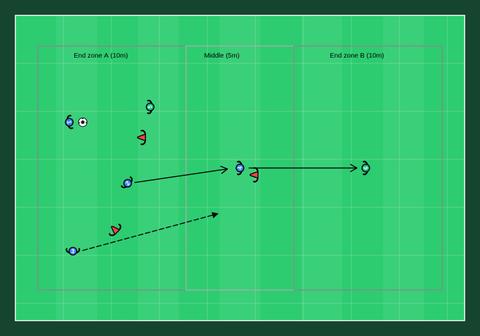
Two teams + 2 jokers (30×15 m, zones 10–5–10 m). Team A builds up play in the end zone (3v2 + joker) and tries to play through the pivot player in the narrow middle zone to the other end zone, where the joker receives. From the defending team, 2 press in the end zone, 1 covers the middle zone. After winning the ball, the team that won it starts the build-up from their own end zone. The pivot simulates a midfielder, the end-zone players simulate centre-backs.
Three-zone possession drill (basic)
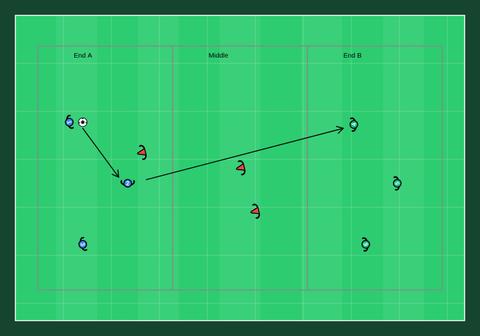
Three teams, one per zone (30×15 m divided into three 10×15 m areas). The teams in the end zones keep possession and try to pass to the other end zone. The middle team sends 2 players to win the ball in an end zone and 1 stays in the middle to cut out passes between the zones. When the ball is won or goes out, the team that lost possession moves into the middle. A point is scored when the ball is played successfully from end to end.
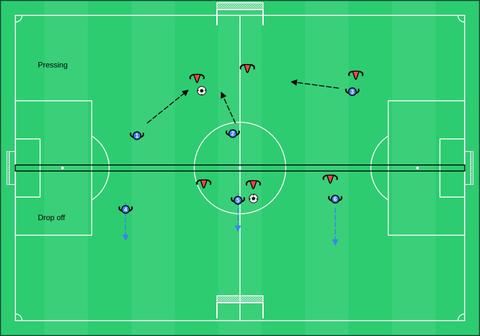
Press or drop off?
The defending team practises two alternative reactions after a loss of possession: (1) counter-press high if the ball was lost in the opponent's half, (2) drop off and reorganise if the ball was lost in their own half. The coach signals which option is to be carried out. The team learns to recognise the right moment for both.
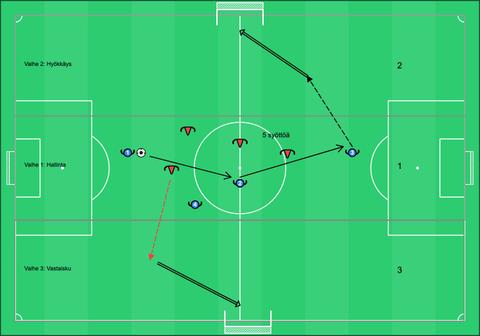
Three-phase transition game
The pitch is divided into three zones. The game starts in the middle zone as a possession game. When a team completes 5 passes, they attack the opponent's goal (phase 2). If the defending team wins the ball, they make a counter-attack towards the other goal (phase 3). Each phase requires different tactical understanding.
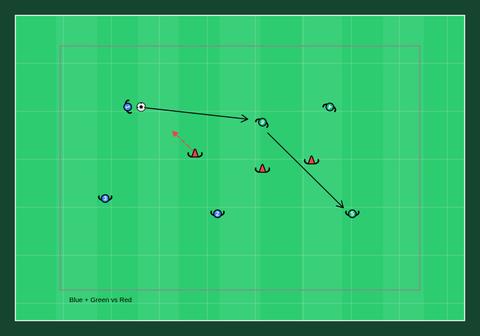
Three-team possession game
Three teams (e.g. 3×3 or 3×4). Two teams play together against the team that has lost possession. When a team loses the ball, it moves into defending and the other team joins the team in possession. Continuous transitions of roles.
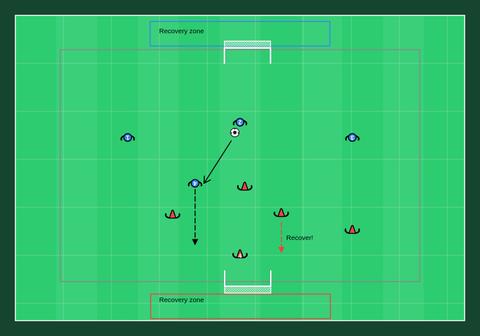
4v4 recovery zone game
4v4 game with two goals. Each team has its own "recovery zone" behind the goal. When a team loses possession, one player must go into the recovery zone before they can take part in defending. This creates temporary numerical superiority for the attacking team and forces a quick transition.