Soccer shooting drills: striking technique
Most of the work here goes into the strike itself, from the approach and the planted foot beside the ball to the contact and the follow-through. Players repeat the technique best close to goal with a still ball. After that, they shoot off a pass, off a dribble and on the turn. Have them use both feet and aim low for the corners. With a goalkeeper in, every rep counts. A quick restart means nobody stands around for long. On the board, move the cones closer or wider to suit your players.
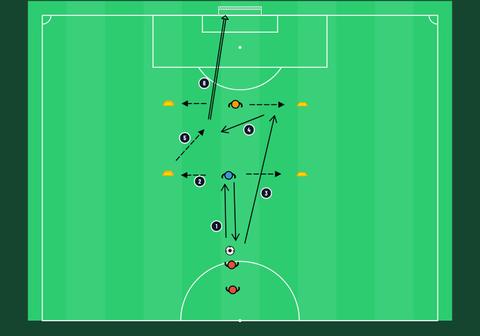
Barcelona shooting drill
A pass is played from the line to the blue player, who plays a one-two back to the first player in the line. He then chooses which cone to move to, and the yellow player moves to the opposite cone on his own line. The first player in the line passes to the yellow player, who lays off a one-two to the blue player, who aims to shoot first time from the pass into the goal.
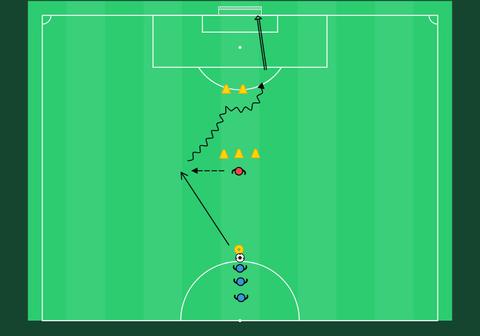
Dribbling and finishing
The red player chooses a side to move towards and calls for the pass. The first player in the queue plays the pass and the red player aims to take the first touch in the direction of travel. The red player dribbles towards the goal, beats the cone defender with a feint of their choice and shoots into the goal. Rotation: the passer becomes the finisher.
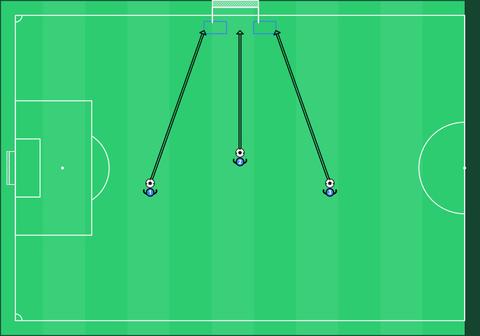
Shooting from a stationary ball
Players take turns shooting a stationary ball towards the goal from different distances (8–15 m). The balls are placed at different angles in front of the goal. Focus on correct striking technique: positioning the non-kicking foot next to the ball, locking the ankle, and striking with the instep.
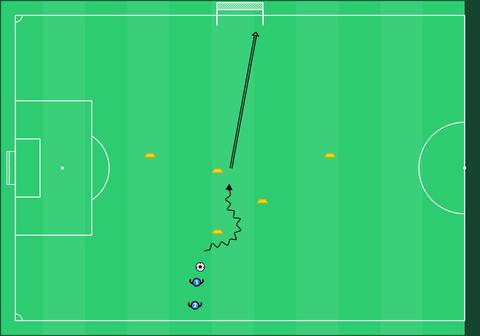
Dribbling and shooting
Players dribble the ball past or through the cones before shooting. The dribbling starts approximately 20–25 metres from the goal, the shooting area marked with cones approximately 10–14 metres away. Head up before shooting.
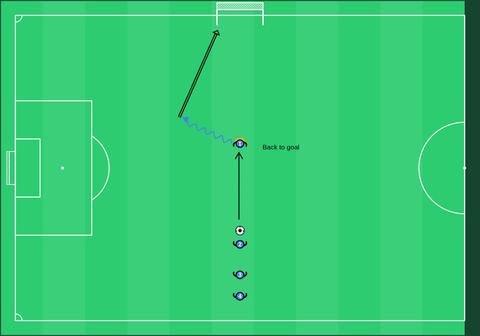
Turn and shoot
The player stands with their back to goal around 11–14 metres away, with the passer in front. The passer plays a low pass, the player controls the ball with the first touch to the side and shoots with the second touch.
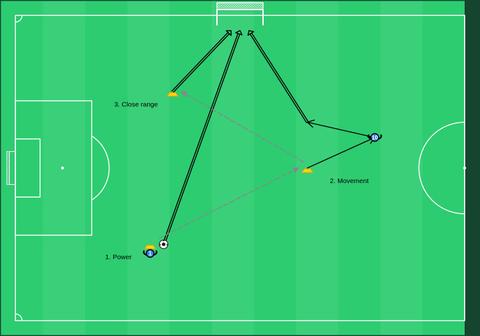
Shooting circuit
Three-point shooting circuit: (1) power shot from around 20 metres, (2) shot on the move from the passer’s lay-off from around 14 metres and (3) close-range shot or half-volley from short distance. After each shot, quickly move to the next station.
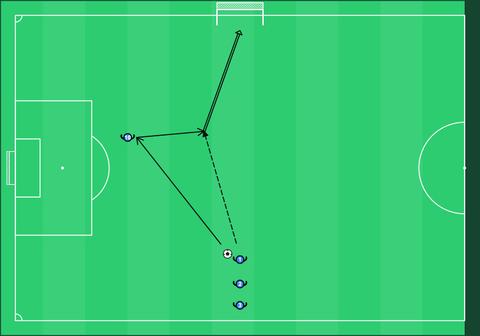
Passing and shooting
A line of players 18–20 metres from the goal, the passer at the edge of the penalty area. The shooter passes to the passer and continues the run, the passer returns the ball with one-touch into the shooter’s path. The shooter finishes directly or with one-touch.
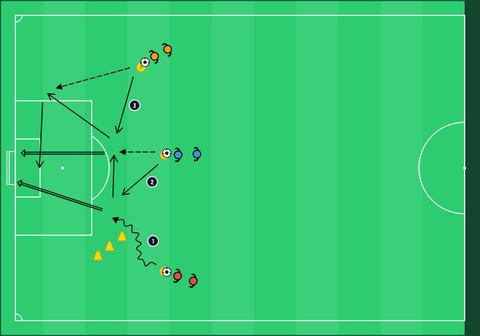
Finishing from three positions
The red player sets off, feints past the cone defender and shoots into the goal. The blue player immediately gives a pass to the red player, and the red player lays off a one-two for the blue player to shoot into the goal. After this, the yellow player gives a pass to the blue player, who plays a one-two towards the end line. The yellow player crosses from the end line, and both the blue and red players take part in the finishing.
Two-phase 1v1 to goal
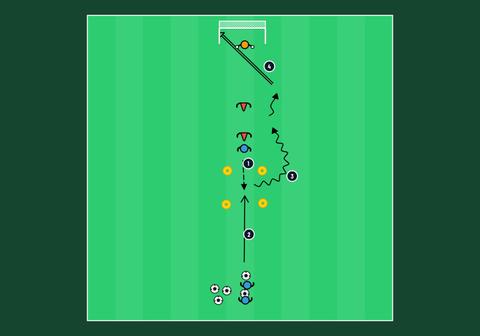
Two-phase 1v1. Starts with the attacker’s movement. The attacker asks for the pass into a square marked out with cones (the 1st defender follows), where they aim to move the ball with their first touch to either side. Once the ball is outside the square, it is the second defender’s turn to defend. Now a traditional 1v1, where the attacker aims for finishing. Rotation of roles: attacker goes to the back of the queue, 1st defender becomes the attacker and the second defender becomes the first defender. The passer becomes the second defender.
Free kick: argument and the walker
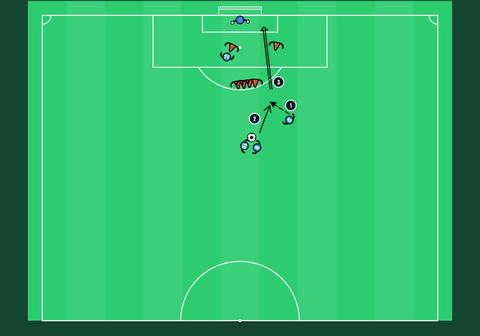
Two players stay over the ball and start acting out a disagreement about which one will take the shot. Meanwhile, a third walks calmly towards his own position out wide, without looking towards the ball even once. In the middle of the argument, the ball rolls into his path, and the shot is taken with the first touch from a new angle that the wall cannot turn to in time. The pattern lives or dies with the walker: as soon as he glances at the ball or changes into a run too early, the defending reads the pattern. The pass is played only when the walker is one step away from the shooting position.
Free kick: splitting screen
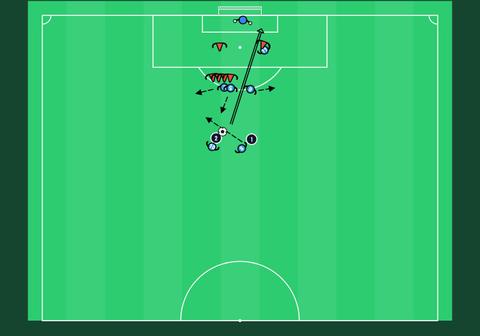
Direct free kick from around 20 metres, where your own line of three players stands in the goalkeeper’s line of sight, at least one metre away from the wall, as the law requires. A decoy runner goes over the ball, and at the same moment the line splits to the sides. The shooter strikes low through the newly opened channel into the far corner, where the goalkeeper only has time to look once the ball is already moving. The role of the line is not to cover the whole goal but to take away the goalkeeper’s moment of release: a goalkeeper who reacts late will not reach the low corner. Practise the line splitting so that it happens exactly on the shooter’s final step — if the line splits too early, it reveals everything.
Finishing from a cut-back
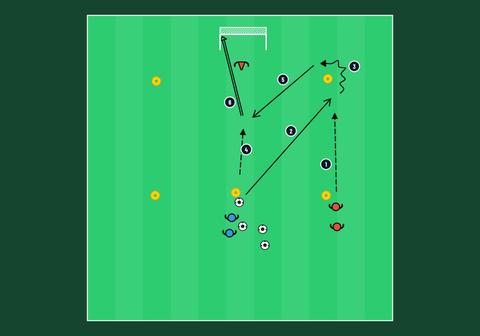
The drill starts with the red player making a movement, which the player in the middle looks to find with a pass. The red player controls the ball, goes around the cone near the end line and plays a cut-back pass to the central player, who looks to shoot and score. The queues change after every repetition.
Speed race on a cone course
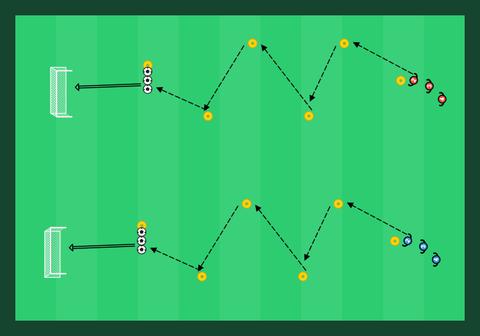
Two identical courses side by side, with a team on each. At the end of the course there is a small goal and a cone in front of it with three balls. Between the goal and the starting cone there are four cones alternating on different sides of the course. The first player starts on the signal and goes round the cones at full speed, passing each on a different side. From the last cone, straight to the ball and a shot into the small goal. When the ball is in the goal, the next player starts. The team that gets all three balls into the goal first wins. Three players on each course, six in total. Adjust the spacing between the cones to suit the group. The closer together the cones are, the more the course demands braking and changes of direction.
Finishing from a one-two
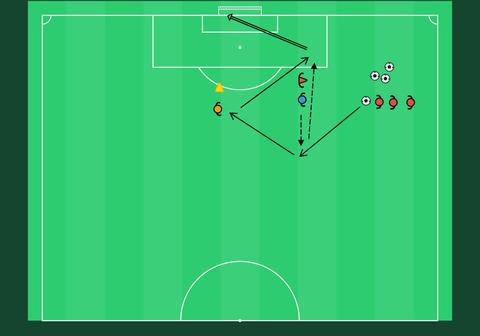
The blue player makes the initial movement away from the defender and the first player in the queue plays a pass into the movement. The blue player takes a control and immediately continues with a pass to the yellow player. The yellow player lays off the one-two behind the defender and the blue player aims to shoot the ball into the goal directly from the pass. The defender tracks the run but does not intercept the passes. Rotation: from attacker to laying off the one-two and defender to attacking. The player laying off the one-two goes to the back of the queue and the player making the first pass becomes the defender.
Passing, dribbling and shot from a through pass
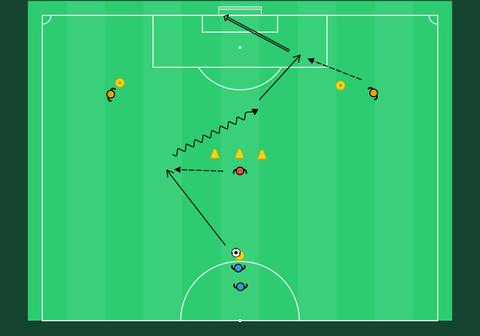
The player in front of the cones makes a movement to either side of the line of cones and asks for the pass. The first player in the queue plays a pass and the receiver takes a short dribble towards the player positioned on the opposite diagonal and plays a through pass to them. The receiving player tries to "avoid offside" (the cones represent the deepest defenders) and finish first time from the pass.
Cross and finishing on the move
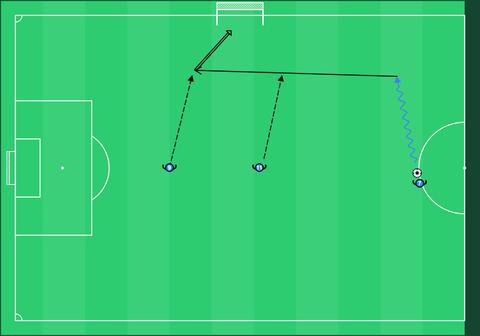
The wide player receives the ball and goes to the byline or into the inside channel. In the penalty area, two attackers make crossing runs: one to the near post, the other to the far post. The player crossing chooses the type of cross.
3v2 finishing
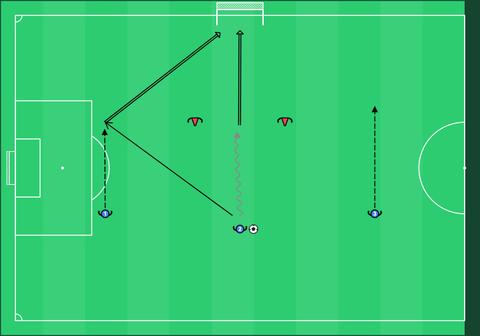
Three attackers start with the ball and move towards two defenders. The aim is to create numerical superiority and finish. After a goal, the attackers receive a new ball and attack the opposite goal.
One-two and finishing
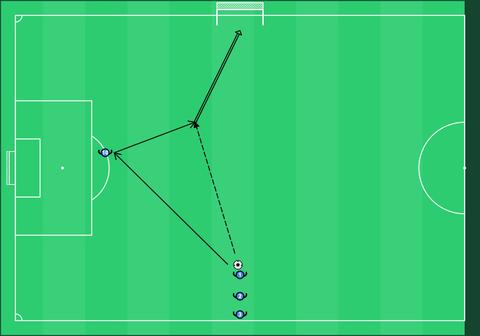
Players in a queue approximately 25 metres from goal. A passer is positioned on the side. The player plays a pass to the wide passer, makes a forward run and receives the ball back from a one-two. Finishes into the goal with one or two touches.
Back to goal — turn and finish
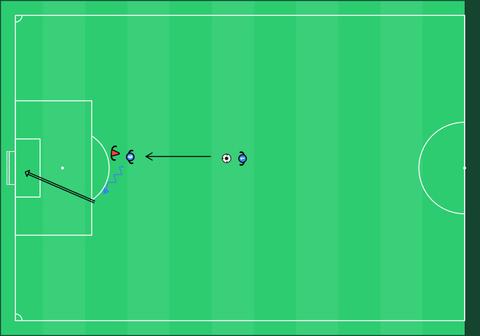
Attacker on the edge of the penalty area with back to goal, defender behind. The passer plays the ball to the attacker, who takes control, turns away from the defender and finishes. Check the defender’s position over the shoulder. Depending on the age group and skill level, you can make it easier at first by requiring the defender to keep their hands behind their back.