4 futsal drills that show how futsal differs from football
When your team moves indoors for the winter, football patterns don't carry over as they are. The court is narrow, the ball comes back from the touchline with a kick, and there are four outfield players. These four drills show where futsal differs from football most clearly. Each comes with what makes it futsal and what to watch as a coach.
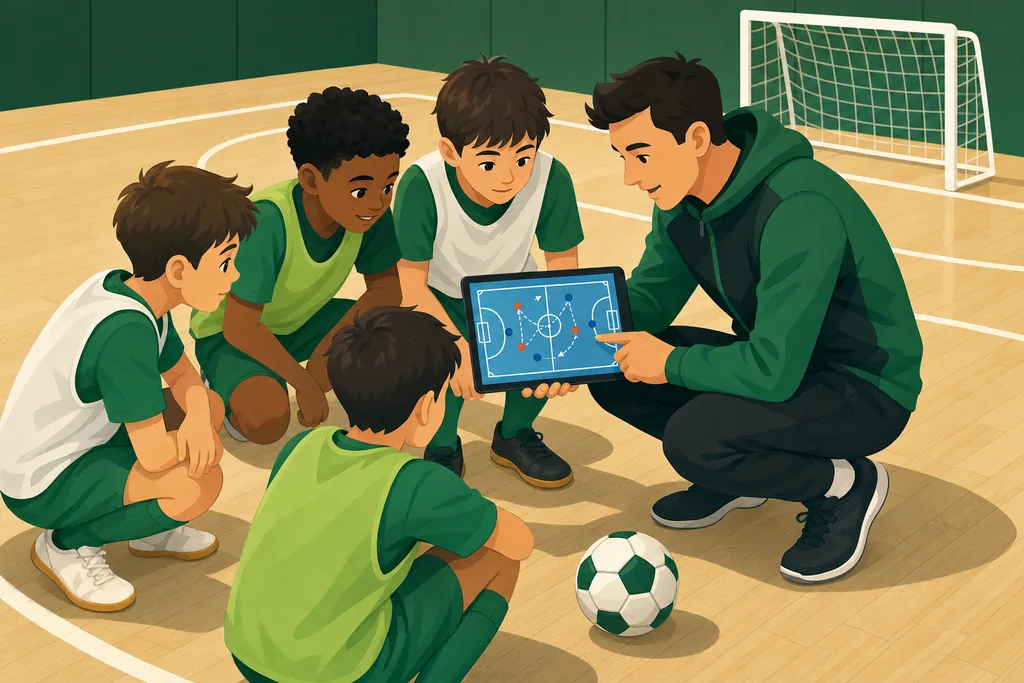
Futsal positions in brief
The drills use three positions. The base player (fixo or cierre) plays deepest of the outfield players and directs the game. The wingers (ala) cover the flanks in attack and defence. The pivot is the striker who stays close to the opponents' goal and offers a target [4]. Roles are looser than in football, and players swap positions during play.
1. Paralela: the run down the touchline (2v2)
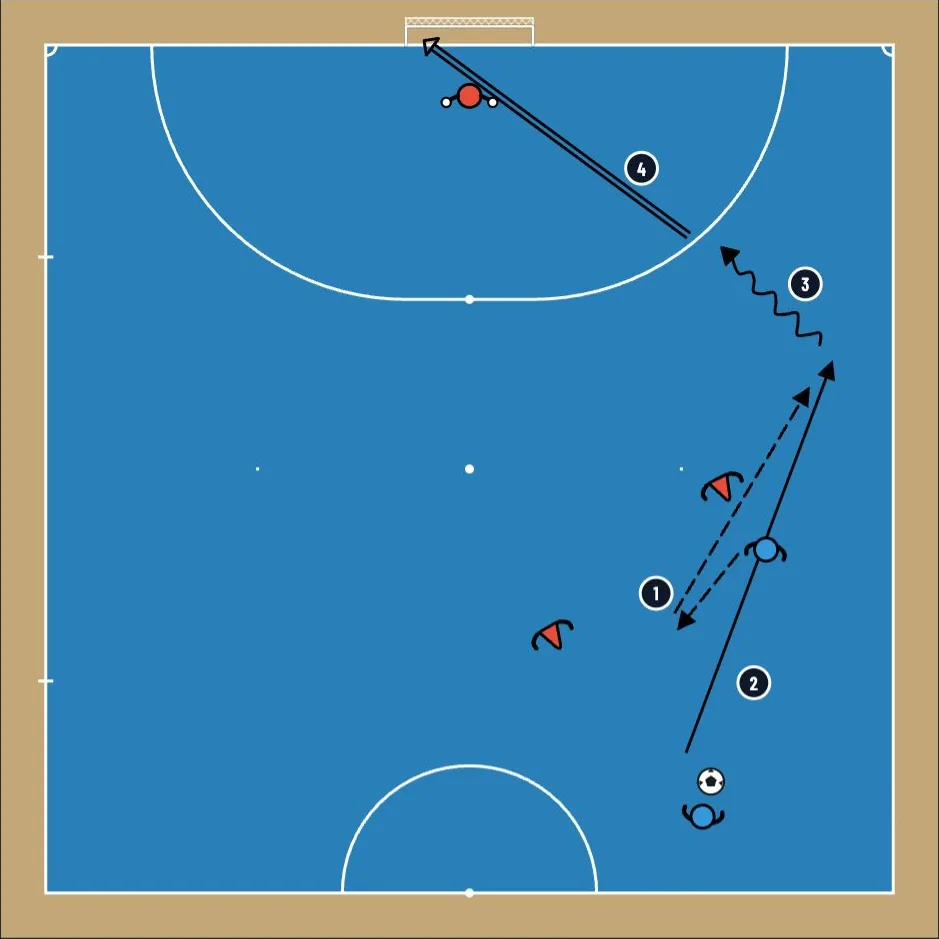
What makes it futsal
Paralela is Spanish and Portuguese for "parallel". The name comes from the pass, which travels parallel to the touchline. It is played before the teammate reaches their new spot, so they collect it on the run, already facing goal [3]. On a narrow court, the lane behind the defender along the touchline is often the only free space.
How the drill runs
The base player and a winger attack two defenders and a goalkeeper. The winger first comes towards the ball at an angle and drags the marker along. Then they change direction and cut down the touchline. At the same moment the base player plays a long ball into the space behind the defender, and the winger carries it inside and shoots at the far post.
What to watch
- A clear change of direction, with a change of pace at that point.
- The pass goes as the cut starts. A runner who is already free has waited too long.
- The pass is on the ground, into space ahead of the runner.
2. Pivot layoff and far-post run (3v2)
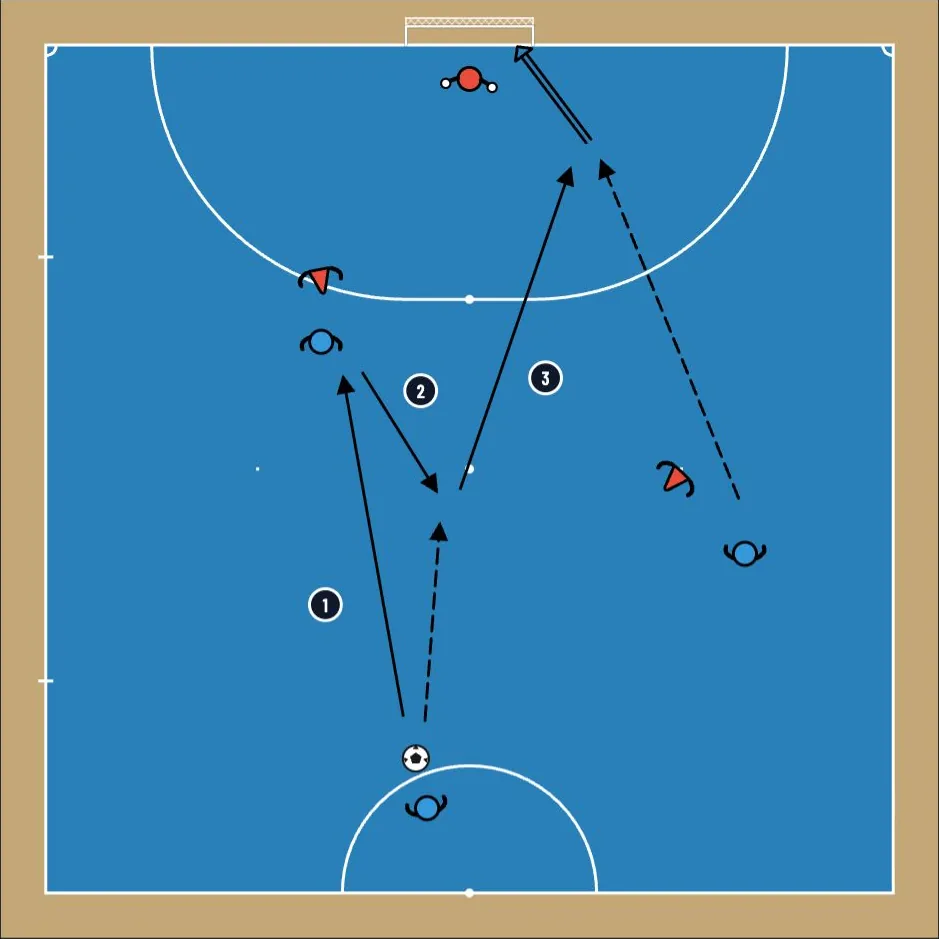
What makes it futsal
The pivot usually receives with their back to goal. FIFA's technical study of the 2025 Futsal Women's World Cup describes good pivots turning side-on so the ball stays as far from the defender as possible, with teammates moving the moment the ball goes into the pivot [2]. The ball goes through the pivot, and someone else often scores.
How the drill runs
The base player passes into the pivot and follows the pass. The pivot lays it off first time to the arriving base player. Meanwhile the winger on the far side runs to the far post. The second defender has to choose: stay with the runner and the base player shoots, or step out to press and the base player slides a low ball across goal to the far post.
What to watch
- The pivot receives side-on, body between the defender and the ball.
- The winger sets off for the far post as soon as the ball goes into the pivot.
- The base player checks the second defender before the layoff arrives.
3. Kick-in pattern through the pivot
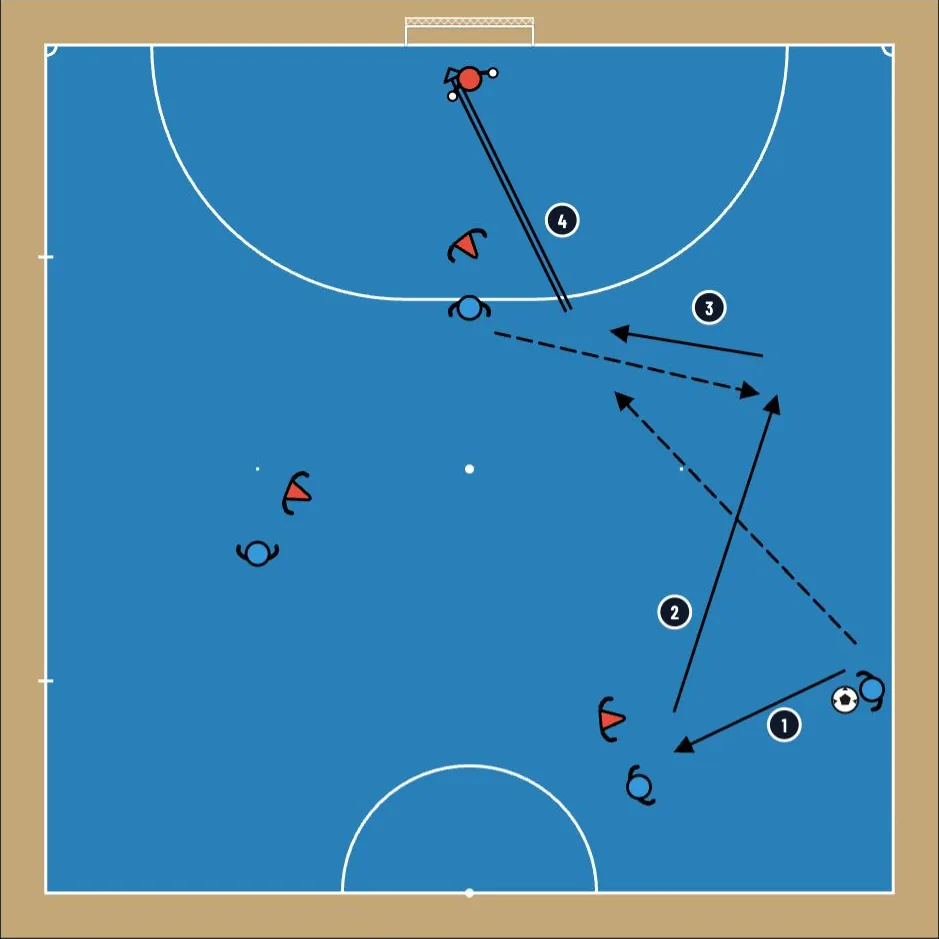
What makes it futsal
In futsal the ball comes back from the touchline with a kick, taken within four seconds, and opponents must be at least five metres away [1]. Four seconds is not long enough to invent something, so it pays to have a rehearsed pattern, much like a set corner in football.
How the drill runs
The kicker plays a short pass to the base player inside and immediately runs diagonally towards goal. At the same time the pivot moves from in front of goal out to the flank, taking the marker along. The base player finds the pivot wide, and the pivot plays the ball into the middle for the kicker to shoot. The pattern is based on a kick-in exercise in FIFA's futsal coaching manual [1].
What to watch
- The kicker looks up before the kick.
- The pivot leaves for the flank as the ball is kicked.
- If the lane to the pivot is closed, the base player switches play to the other wing.
4. Four-player rotation (4-0)
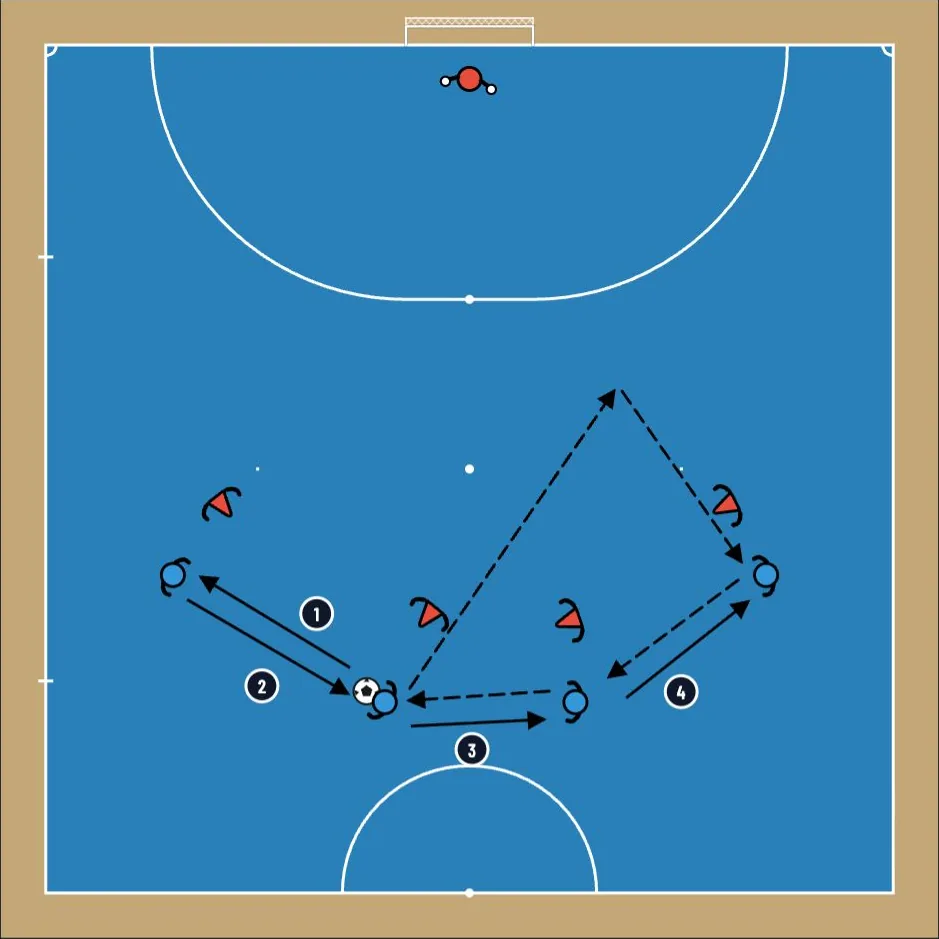
What makes it futsal
In a 4-0 there is no fixed pivot. All four outfield players play on one line and keep swapping places. FIFA's manual asks for movement off the ball that the defence can't predict, the ball carrier to always have a safe option nearby, and two movements to happen together, one as a decoy and the other as the surprise [1].
How the drill runs
A central player passes to the flank and immediately cuts diagonally towards goal. The marker follows, and the others shift one place to fill the gap. The winger plays the ball back into the filled spot, and the cutter ends up as the new winger on the other side. Then the same happens the other way.
What to watch
- The passer starts the cut as the ball leaves for the flank.
- The empty spot is filled at once, so the ball carrier has a nearby option.
- The ball moves with one or two touches.
Put them on your own board
All four drills are animated on the futsal drills page. Copy any of them and adjust it to your team: change the number of defenders, move players around, or draw your own variation on the same half court.
Sources
- FIFA: Futsal Coaching Manual (laws, kick-in exercises, 1-4-0 attacking formation)
- FIFA Training Centre: "The pivot: A team's focal point for progression" (2025)
- ANEFS (Spanish futsal coaches' association): Futsalpedia, "la paralela"
- Wikipedia (Finnish): Futsalin pelipaikat