Five common mistakes in youth football coaching
Many children drop out of organised sport during their teenage years. In youth football, the annual dropout rate is about 24% [2]. There are many reasons, but how a coach designs sessions has a direct effect on whether players stick around.
These five mistakes keep showing up in the research.
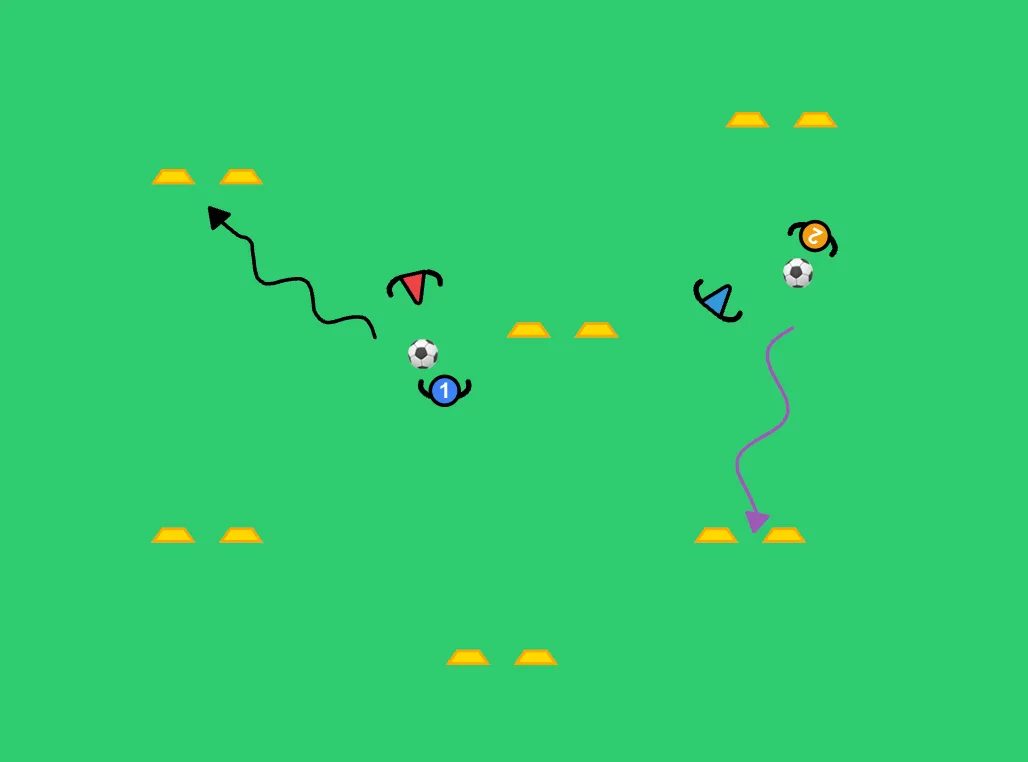
1. Too much standing around and queuing
O'Connor et al. (2018) observed Australian youth coaches and found that about 37% of session time was inactive: listening to the coach in a huddle (10%), frozen on the spot during an activity (17%), and transitions between activities (6%) [4]. Partington et al. (2014) did not measure passive time directly, but in their data 53–65% of session time was spent in training form activities, where queuing is more likely than in game form [3].
The fix is structural: small-sided formats, station-based training, and a ball for every player during warm-up. The Finnish FA targets at least 80% active time [5].
Edit your own copy in TacticsBoard
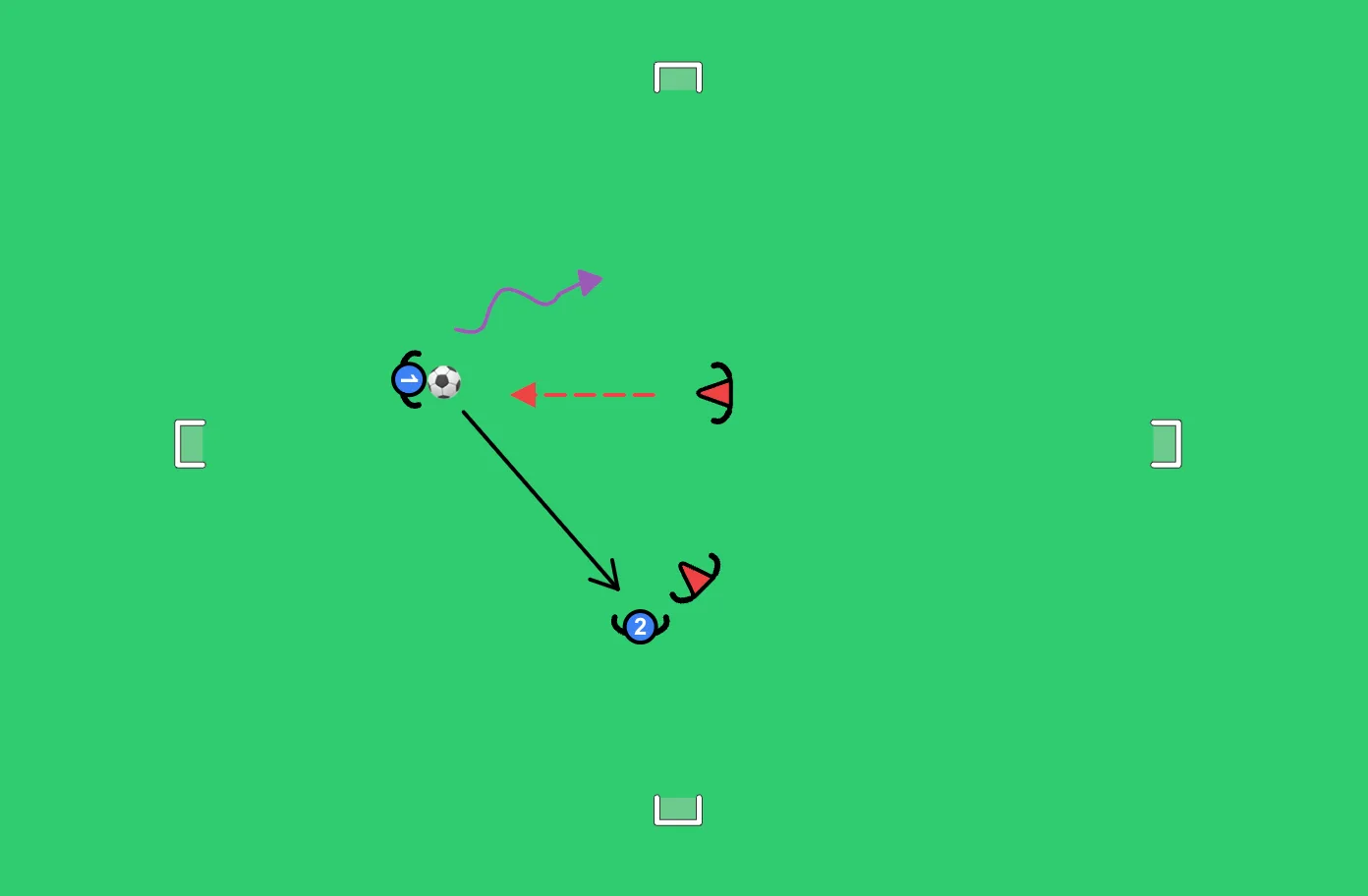
2. Too much drilling, not enough playing
Ford et al. (2010) studied 25 youth coaches and found that at all levels, players spent more time in isolated drills than in game-form activities [6]. In Partington's data, 53–65% of training time went to drills [3].
The problem isn't drills themselves but how much time they take up. Game-based training develops technique, tactics, and fitness at the same time. In a meta-analysis of youth studies, small-sided game programmes improved technical execution compared with control groups [7].
Edit your own copy in TacticsBoard
3. Too early specialisation
The International Society of Sport Psychology's (ISSP) position is clear: early specialisation in one sport increases injury risk and dropout [8].
What the research says:
- Jayanthi et al. (2015): when sport-specific hours exceed age in years, overuse injury risk doubles (OR 2.07) [9]
- McLellan et al. (2022): later specialisation benefited performance in 7 of 9 studies and reduced injury risk in all of them [10]
- Read et al. (2016): 50% of players entering scholarship programmes are no longer involved two years later [11]
Under-13s should play multiple sports. Football is a late-specialisation sport.
4. Training load doesn't match age or maturity
Children are not small adults. In their review, McBurnie et al. (2021) point out that injury risk rises around the growth spurt (circa-PHV) [12].
The AAP (2024) recommends [1]:
- Sport-specific hours per week should not exceed the child's age in years
- At least 1 rest day per week
- 3 months per year away from the primary sport
For load management, an ACWR (acute:chronic workload ratio) of 1.0–1.25 is the safest zone. Above 1.5, injury risk goes up 2–7 times [13].
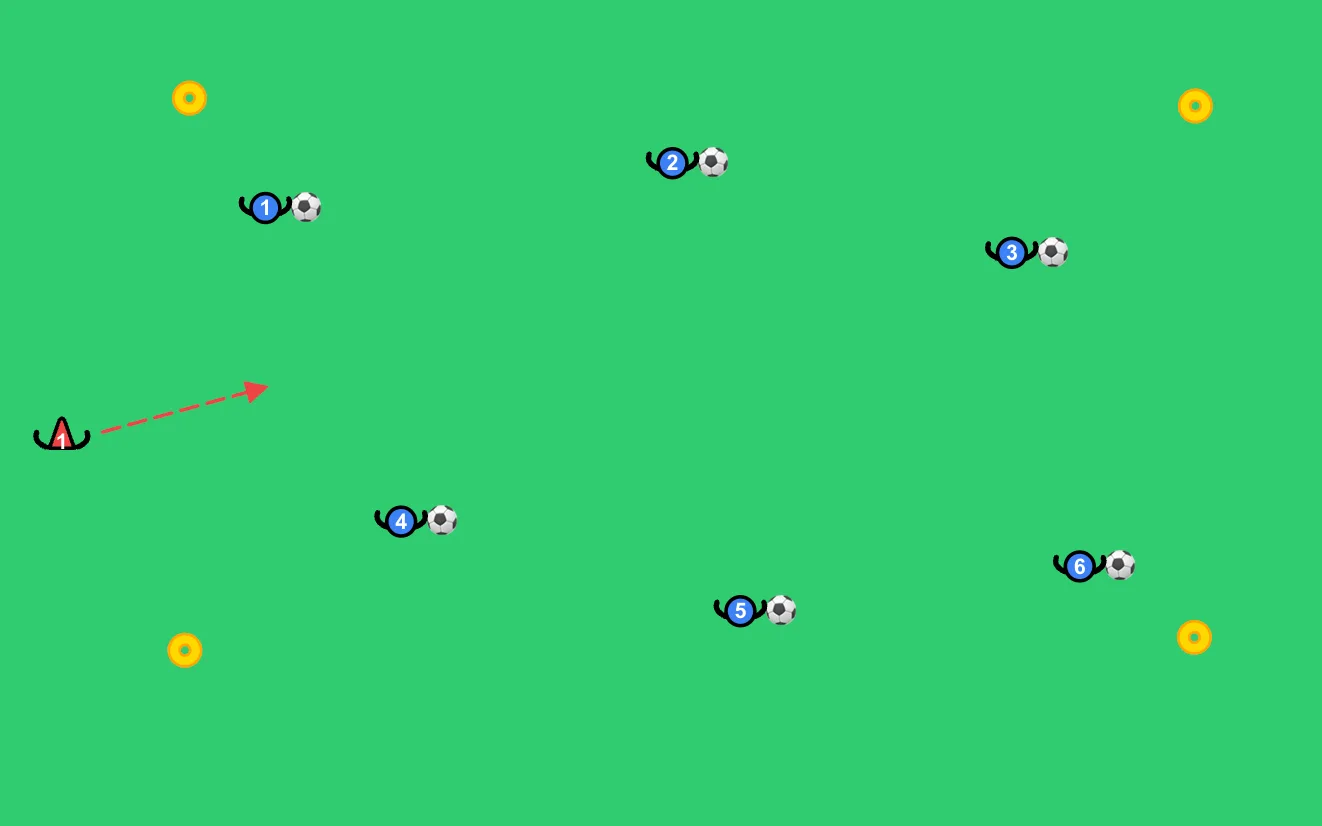
5. Fun isn't planned for
Visek et al. (2015) studied 142 young players, 37 coaches, and 57 parents. They identified 81 determinants of fun. The top three were good sportsmanship, trying hard, and positive coaching. Winning wasn't in the top three [14].
Smith and Smoll have shown that coach training in positive coaching techniques significantly reduces dropout rates [15].
Training can be serious and fun at the same time. It comes down to whether players get to try things, succeed sometimes, and feel like they're getting better.
Edit your own copy in TacticsBoard
Summary
| Mistake | Key number | Source |
|---|---|---|
| Standing around | ~37% of time passive | [4] |
| Too many drills | 53–65% of time on drills | [3] |
| Early specialisation | 2x overuse injury risk | [9] |
| Wrong training load | 2–7x injury risk | [13] |
| Fun is missing | Significant dropout reduction | [15] |
Sources
- AAP (2024): "Overuse Injuries, Overtraining, and Burnout in Young Athletes"— Pediatrics
- Balish, McLaren, Rainham & Blanchard (2014): "Correlates of youth sport attrition" — Psychology of Sport and Exercise
- Partington, Cushion & Harvey (2014): "Practice activities and coaching behaviors" — Journal of Sports Sciences
- O'Connor, Larkin & Williams (2018): "Observations of youth football training" — Journal of Sports Sciences
- Finnish FA (2022): "Finnish youth football sessions observed 2022"
- Ford, Yates & Williams (2010): "An analysis of practice activities" — Journal of Sports Sciences
- Clemente, Ramirez-Campillo, Sarmento, Praça et al. (2021): "Effects of SSG Interventions on Technical Execution" — Frontiers in Psychology
- Cote, Lidor & Hackfort (2009): "ISSP Position Stand: To sample or to specialize?"
- Jayanthi, LaBella, Fischer et al. (2015): "Sports-Specialized Intensive Training and Injury Risk" — AJSM
- McLellan, Allahabadi & Pandya (2022): "Youth Sports Specialization" — OJSM
- Read, Oliver, De Ste Croix et al. (2016): "Scientific foundations of early soccer specialisation" — Journal of Sports Sciences
- McBurnie, Dos'Santos, Johnson & Leng (2021): "Training Management of the Elite Adolescent Soccer Player"— Sports
- Bowen et al. (2019): "ACWR spikes and injury rate in EPL players" — BJSM
- Visek, Achrati, Mannix et al. (2015): "The Fun Integration Theory" — JPAH
- Smith & Smoll: "Coach Effectiveness Training" — APA