Esercitazioni di controllo orientato che preparano il passaggio successivo
Un buon controllo orientato porta la palla dove avverrà la giocata successiva: lontano dalla pressione, nello spazio o direttamente in un passaggio. Inizia a coppie o con piccoli schemi, come il passaggio a coppie, un triangolo o un quadrato con controllo orientato, dove lo stesso controllo torna più e più volte. Poi aggiungi direzione e giri: controllo e giro, giro e tiro, oppure un giro spalle alla porta con un difensore dietro. I rondo e i giochi di possesso come il 4 contro 1 e il 5 contro 2 completano il lavoro, perché lì il controllo deve essere giusto con un difensore che arriva. Aiuta guardare oltre la spalla prima che arrivi la palla, e aiuta usare entrambi i piedi.
Diamante di passaggio
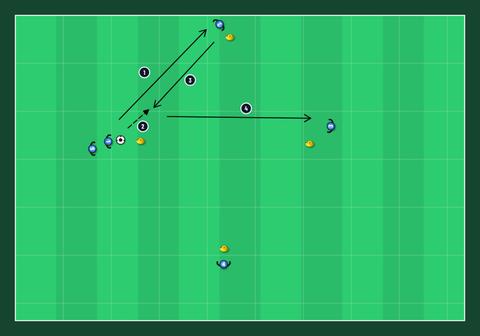
Si crea un diamante con i coni, con due giocatori al primo cono e un giocatore su ciascuno degli altri. Il giocatore 1 effettua il primo passaggio al giocatore 2, che lo restituisce con un uno-due. Il giocatore 1 cerca di effettuare un passaggio lungo al giocatore 3 con il controllo orientato. Dopo i passaggi, ruotare sempre nella direzione del passaggio.
Square passing with directional first touch
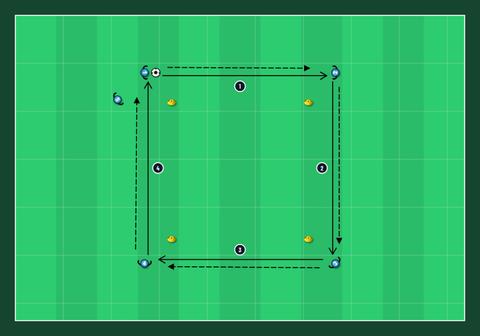
Players are placed at four cones in a square. The ball is worked clockwise: the player plays a pass to the next cone and runs after the pass. The receiver takes the ball with a directional first touch.
Passing circle
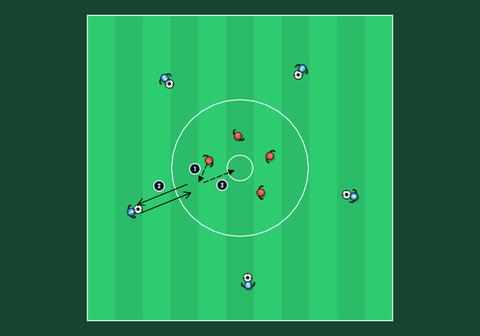
The animation first shows a common mistake and then the correct way. The players on the outside have balls. The players in the middle move and ask for the ball from the outside players and at first return it after a control (aiming to do so with the 2nd touch) and then one-touch as a one-two. The third variation is a throw from the wide player, which the middle player controls and returns. The middle players always go through the middle of the area after the return pass before asking for a new pass.
Finishing from a one-two
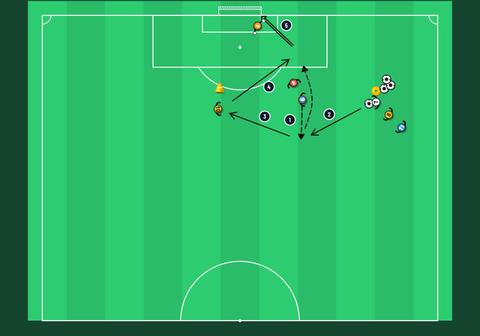
Flat cones show the starting positions of the passer and the attacker. The attacker makes the initial movement away from the defender, and the first player in the queue plays a pass into the movement. The attacker controls the ball and immediately passes to the wall player. The wall player plays the one-two into the space behind the defender. The attacker goes around the defender on the other side and aims to shoot first time past the goalkeeper. The defender tracks the run but does not intercept passes. Rotation: attacker becomes the wall player, wall player goes to the back of the queue, the player who made the first pass becomes the defender, and the defender becomes the attacker.
Passing in pairs
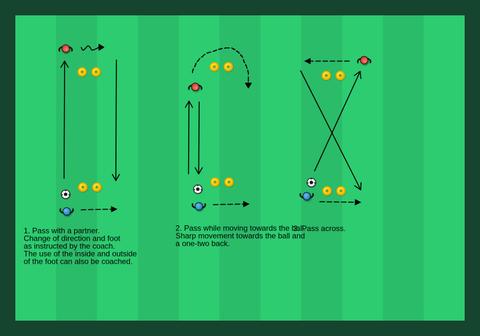
1) Straight pass back and forth with a partner - change of direction and foot as instructed by the coach, the use of the inside and outside of the foot can also be coached. 2) Pass while moving towards the ball - sharp movement towards the ball and a one-two back. 3) Pass across - pairs pass across.
Aerial ball control
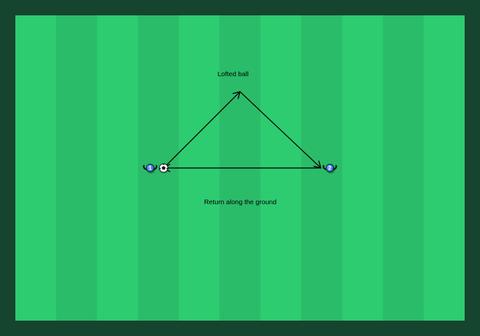
In pairs: the server throws a lofted ball to the receiver, who controls it with the thigh, chest or instep and plays the ball back along the ground in two touches. Three stations: thigh and down to the ground, chest and down to the ground, instep and down to the ground.
Passing and control in pairs
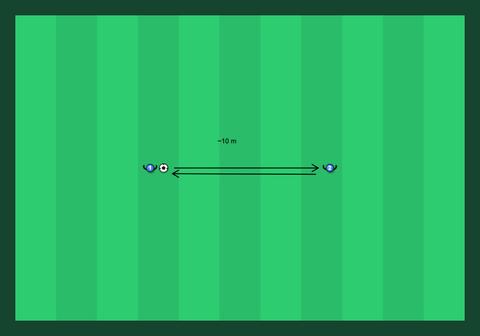
In pairs facing each other at a distance of about 10 metres. Player A plays a pass along the ground to player B, who controls the ball with the first touch and passes it back with the second touch. Variation: control with the right/left foot.
Control and turning
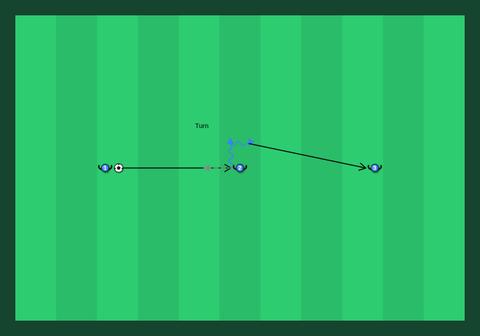
The central player moves towards the passer, takes the control with the first touch and turns 180 degrees. Passes with the second or third touch in the opposite direction to the target player.
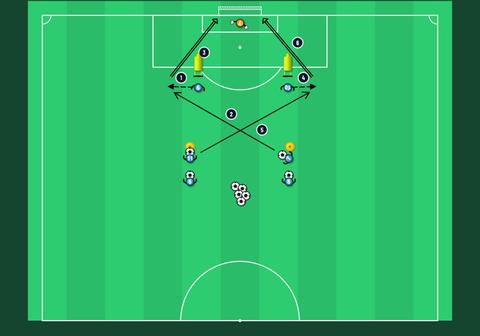
Breaking away and shooting from both sides
Finishing when the defender is behind you. The attacker stands in front of the mannequin with their back to goal. They move away from the mannequin outwards and call for a pass from the queue on the opposite side. First touch towards goal and a shot. Then the same on the other side. Rotation: the passer goes to shoot, and after the shot the finisher stays in the queue on their own side, so the queue changes on every repetition.
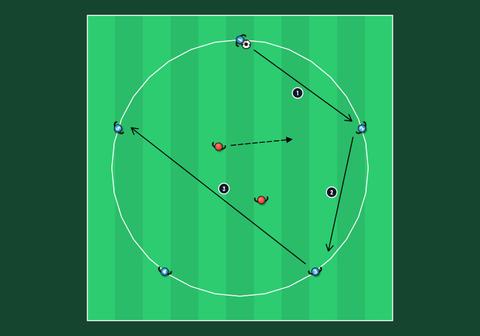
Rondo 5 contro 2
Delimita un cerchio di circa 12 metri. Cinque giocatori si dispongono sul perimetro a distanze uguali, e due difensori vanno al centro. I giocatori sul perimetro si scambiano il passaggio e si muovono lungo il cerchio, ma non devono entrare all'interno. Quando tra i difensori si apre uno spazio, la palla viene giocata attraverso quel varco. Il giocatore che perde il possesso palla va al centro, e al suo posto sul perimetro esce il difensore che è rimasto al centro più a lungo. Lo stesso cambio si effettua quando la palla esce dal cerchio. Si assegna un punto ogni dieci passaggi consecutivi. Limita i tocchi a uno o due in base al livello.
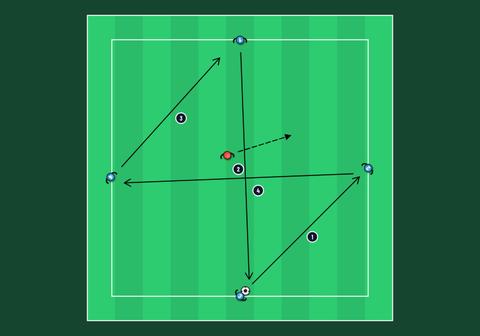
4v1 rondo
Mark out a square of approximately 10 x 10 metres. Four players are on the sides of the square, one on each side, with a defender in the middle. The players on the outside keep possession of the ball. They may move along their own side, but must not go inside the square. The defender tries to intercept the pass. When the defender wins the ball or the ball goes out of the square, the defender swaps places with the player who lost possession. Play restarts immediately. Ten consecutive passes equals one point. Make it easier with a bigger square or unlimited touches, and harder with a smaller square or a two-touch limit.
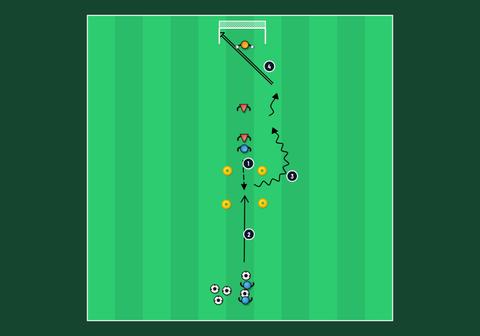
Two-phase 1v1 to goal
Two-phase 1v1. Starts with the attacker’s movement. The attacker asks for the pass into a square marked out with cones (the 1st defender follows), where they aim to move the ball with their first touch to either side. Once the ball is outside the square, it is the second defender’s turn to defend. Now a traditional 1v1, where the attacker aims for finishing. Rotation of roles: attacker goes to the back of the queue, 1st defender becomes the attacker and the second defender becomes the first defender. The passer becomes the second defender.
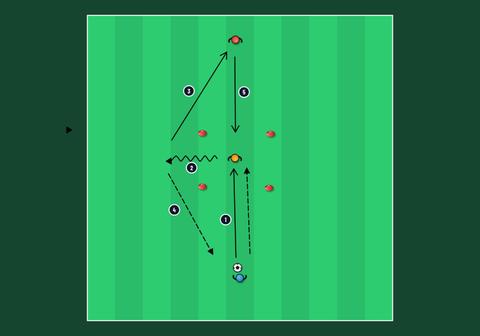
First touch and passing on the move
A three-player drill with one in the middle of a square marked by cones and two on either side at passing distance. The drill starts with a pass, which the player in the middle aims to guide with the first touch outside the square and immediately pass to the third player. After the pass, move into the centre and the middle player fills the empty space.
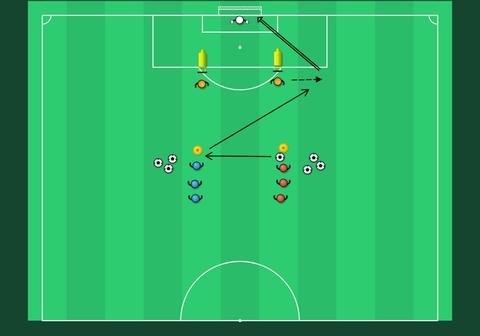
Finishing - defender behind the back
The situation starts with a sideways pass from one queue to the other. The diagonal attacker (orange) moves away to the side from the defender and looks to shoot immediately after the control. In the second variation, the attacker's movement is to the inside of the defender.
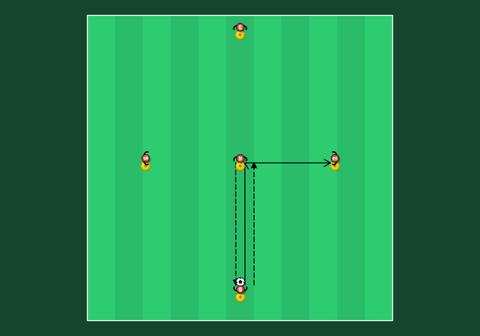
Cross passing with rotation
Five cones in a cross shape: one in the middle, four around it at a distance of 5–10 metres. One player at each cone. The ball starts from an outer cone and is played to the middle player. The middle player takes a directional first touch and with it plays a pass to a new outer cone, not back to where the ball came from. Then the passer and the middle player rotate positions: the passer runs into the middle, and the middle player takes the now free outer position. So there is a different player in the middle on each round. Adjust the distances according to the players’ age and skill level.
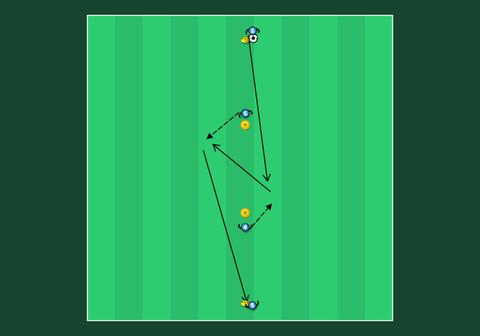
Line passing 2/3
Four players in one line, 5–10 metres apart, each position marked. The ball always bypasses the nearest player. The top player plays a long ball past the first middle player to the second middle player, who has moved out to the side. This player lays the ball off one-touch back to the bypassed player, who has meanwhile moved out to the other side of the line, and the bypassed player plays a long ball to the bottom player, again past the middle player. At the far end, the middle players return to their markers and the same pattern comes back the other way, moving out to the opposite sides. The bypassed player starts moving before the long pass is played.
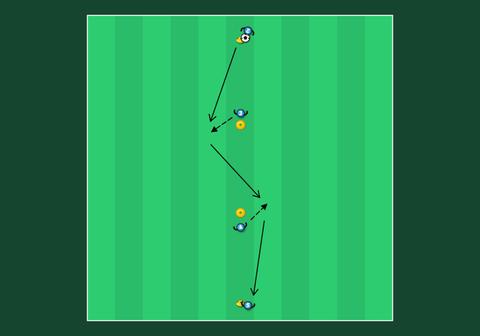
Line passing 1/3
Four players in a straight line 5–10 metres apart, each position marked. The top player starts with the ball. The two middle players move away from their marker to the side of the line, on opposite sides, and receive the ball in an open body position. The ball travels through the line: the top player passes to the first middle player, who passes to the second, who passes to the bottom player. Once it reaches the end, the middle players return to their markers and the same pattern comes back the other way, but now both move out to the opposite side. Start with two touches and move to one-touch when the pattern is flowing.
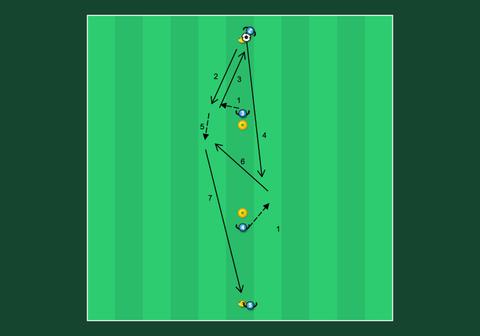
Line passing 3/3
Four players in a line 10–15 metres apart, with a marker at each position. Numbers from top to bottom: two, three, four, five. Two starts with the ball. Going down: two passes to three, who returns it straight back. Two plays a long pass beyond three to four, four directs the ball to three, and three plays a long pass beyond four to five. Going up, the same as a mirror image: five passes to four, gets the return pass and plays a long pass beyond four to three. Three directs it to four, four plays a long pass back to two, and the sequence starts again. Three and four move away from the line to opposite sides just before the pass is played. This allows the long pass to travel beyond the previous player. After their own pass, they return to the line. Short passes with two touches, long passes firmly along the ground. When the pattern is flowing, tighten the short passes to one-touch.
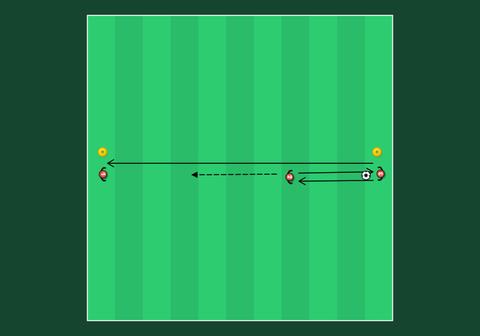
Three-player warm-up passing 3/3
Two players stand still 15–20 metres apart, with markers in front of their feet. The third works between them. One ball. The player on the right plays a short pass to the middle player, who has moved towards the ball, and the middle player returns the ball. Immediately after, the same player plays a long pass to the other end. The middle player does not stay in the passing lane but moves aside and at the same time runs to the other side. The same pattern is repeated there: short pass to the middle player, return pass, and then a long pass back. So the rotation has three passes: short pass in, return pass and long switch. The middle player's job is to get there to receive before the ball and out of the way before the long pass. Change the middle player about every minute.
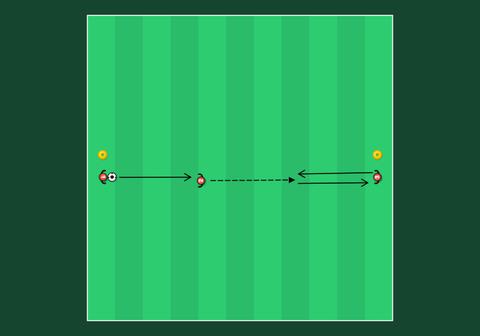
Three-player warm-up passing 2/3
Two players stand still 15–20 metres apart, with markers in front of their feet. The third works between them. One ball. The player on the left passes to the middle player, who has moved towards that side. The middle player takes the first touch towards the opposite side and passes there. The same continues alternately. Demand direction from the first touch: the ball must go where it is going next. Change the middle player about every minute.